How to Cite: Sakura, Kosuke, Ignacio Grávalos Lacambra, Manuel Alejandro Rufasto Ñañez and Patrizia Di Monte. "Design and Construction Processes for Civic Reappropriation of Urban Voids. The Machi Hata Project in Nagano (Japan)". Dearq no. 43 (2025): 55-65. DOI: https://doi.org/10.18389/dearq43.2025.06
Design and Construction Processes for Civic Reappropriation of Urban Voids. The Machi Hata Project in Nagano (Japan)
Received: September 15, 2024 | Accepted: April 25, 2025
This article presents an active service-learning methodology as a pedagogical approach in architecture schools, centered on the community-led appropriation of public space. This methodology was implemented through the Machi Hata Project, which aimed to revitalize three abandoned areas near Zenkoji Temple in Nagano—Sukeroku Garden, La Rencontre Backyard, and A Goat Garden—by transforming them into 'civic gardens.' The study documents the sequential processes of analysis, design, and community-led construction of the community gardens, highlighting their potential both as educational tools and as catalysts for urban regeneration.
Keywords: Education, design and construction, urban voids, community gardens, Machi Hata.
considerations on design and construction methodologies
In recent decades, active teaching methodologies—particularly those categorized as Service-Learning (SL)—have gained increasing prominence within educational systems, as they seek to bridge academic objectives with the real needs of society. In architecture and engineering schools, these methodologies are often implemented through design-build education programs, which engage students in the full process from architectural design to construction, fostering direct interaction with local communities.
The design-build methodology, rooted in SL approaches, is considered an effective pedagogical tool because "it allows students to personally experience the full architectural construction process, learning to mediate between initially theoretical proposals and the pragmatic dimension of reality" (Delport 2016, 20). It bridges theory and practice, which offers substantial benefits to students' professional development. In recent years, these innovative models have gained significant recognition for their capacity to address and solve social challenges within local communities (Kawasaki et al. 2019).
The comprehensive nature of these methodologies, grounded in interdisciplinary and inclusive collaboration, offers a more nuanced perspective that transcends purely theoretical approaches. The article introduces the concept of "networked teaching" as a foundational principle. This network not only connects the physical spaces involved in the project but also fosters social relationships and mutual knowledge exchange between students and community members. Within this dynamic, students gain exposure to local knowledge, including agricultural techniques, bamboo craftsmanship, and creative, community-based problem-solving strategies. At the same time, residents benefit from students' technical expertise in construction, project management, and innovative practices.
The research explores the issue of urban voids through a case study conducted in the city of Nagano, Japan, where students from Shinshu University collaborated closely with local communities. The project exemplifies emerging models of social engagement and redefines academic discourse by fostering direct interaction with community realities, promoting a more pragmatic and constructivist approach to architectural education.
space appropriations
The research engages with the destructive consequences that economic crises have had on urban space, including the proliferation of abandoned lots and disused buildings. These crises, observed as early as in the 1970s, reflect a broader trend in which "the increasingly rapid fluctuation of production processes has been transforming the urban structure according to the resulting obsolescence of space" (Harvey 1977, 45). Similarly, authors such as Jacobs have described this condition as "an anomaly in the urban fabric and, above all, from the perspective of a city understood as a continuum" (2011, 17). Yet, these voids can be understood as opportunities to reconfigure urban life—spaces that, beyond their spatial condition, allow citizens to adapt and reshape them according to their needs (Gravalos and Di Monte 2014, 2022).
From a neo-Marxist perspective, authors such as De Certeau have explored the concept of "public space as the act capable of composing another world not received but made" (2007, 148), emphasizing the potential for individuals to subvert the prescribed uses of space. In a related vein, Lefebvre, in The Right to the City, denounced the "transformation of the use value of cities—'urban reality'—into exchange value—'commodification, speculation, and consumption'" (1975, 76), advocating for the protection of urban space from market-driven logics. For this author, inhabiting entails the creative appropriation of space, transforming it into something beyond its physical form: "turning lived space into place, adapting it, using it, transforming it, and imbuing it with the user's emotions and the inhabitant's imagination—a creative practice that affirms the boundless potential of humanity" (2013, 45). This critical approach has also led to the emergence of an environmental dimension within urban regeneration, where community gardens have become a central strategy. During the 1970s, initiatives such as the Green Guerrillas in New York and the Camden Street Farmers in London arose to promote community support through environmental, social, and educational aims (Moran and Hernandez 2009, 2011; Quesada and Matas 2018). In the Japanese context, notable precedents of urban void reuse include the Miyazaki Community Garden (2001) and the Seseragi Community Farm (2008). Over time, these spaces have evolved beyond their productive roles to embrace a broader social function, serving as community-building and environmental resources at the same time.
urban intervention as a learning method
Architectural learning methods based on the development of real-world projects have been progressively adopted by architecture schools worldwide. A seminal example is the Rural Studio, founded by Professor Samuel Mockbee at Auburn University, Alabama, in the 1990s (Mockbee and Ruth 2018). This program, aimed at supporting disadvantaged communities in the southern United States, engaged students in the design and construction of housing and public facilities using limited and recycled materials. It promoted a hands-on, experiential approach to architectural education that has since inspired similar initiatives across the country (Palma et al. 2021). A key feature of the Rural Studio is its pedagogical model centered on practical learning through design and construction—an approach that closely aligns with the Machi Hata Project. Both initiatives are grounded in design-build methodologies, offering students direct experience through physical interventions in the built environment. However, while the Rural Studio operates in rural settings, the Machi Hata Project is situated within the historic district of an urban center, repurposing vacant land and abandoned buildings to address specific urban challenges.
In the French context, the Les Défis du Bois1 competition, organized by the School of Architecture of Nancy, France, since 2005, stands out as a noteworthy initiative. Focused on the sustainable use of wood in architectural construction, the event primarily involves students and young architects. Participants are challenged to design and build prototypes of sustainable structures within a short time frame, thereby encouraging both ecological awareness and hands-on problem-solving. Unlike the Machi Hata Project, which unfolds continuously throughout the year through seasonal interventions, Les Défis du Bois is structured as an intensive, short-term annual event.
Examples of successful urban interventions with an educational component have also emerged in the Latin American context. One case is Altos de Pino in Bogotá,2 a participatory urbanism initiative in which the community leads urban transformation efforts across areas such as education, the environment, and food security. Spearheaded by Proyecto Escape, Urbz Colombia, and Universidad de La Salle, the initiative combines hands-on workshops with built interventions using local materials. Unlike conventional academic projects, this initiative originated within the community itself, later integrating technical support from universities to strengthen self-management models. Its contribution to architectural education lies in the implementation of participatory methodologies that are adaptable to vulnerable contexts. Similar to the Machi Hata Project, it emphasizes participatory processes; however, it operates within emerging communities rather than in declining yet consolidated urban areas.
Since 2015, the Urb-i Collective has implemented tactical urbanism interventions in São Paulo using rapid, low-cost strategies aimed at improving public space (Sansão et al. 2021). These interventions employ temporary, easily accessible materials to test design solutions before formal implementation. The initiative focuses on enhancing public space and pedestrian safety, promoting active mobility, and fostering social interaction through participatory processes. Its contribution to architectural education lies in its emphasis on practical learning, evaluating solutions before consolidating them, and stimulating creative approaches to urban design. Unlike the Machi Hata Project, which creates new public spaces on vacant lots, Urb-i transforms existing urban spaces through provisional modifications, serving as experimental prototypes for potential long-term interventions.
challenges and opportunities of local communities in japan
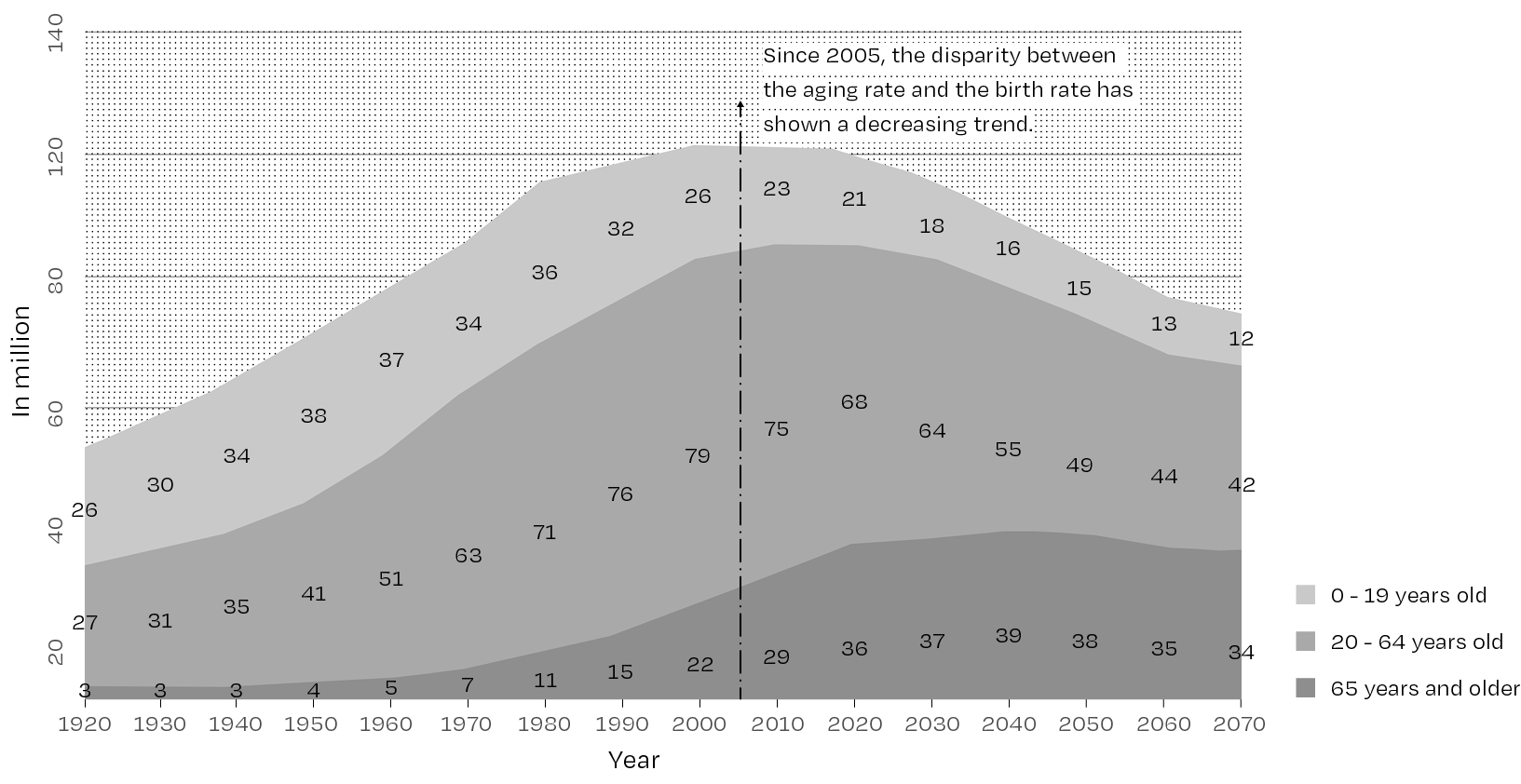
While this article focuses on the case of Nagano, a broader understanding of the Japanese context is essential for interpreting this phenomenon. To clarify the transition between macro- and micro-scale urban analysis and to strengthen the methodological framework, it is important to identify the most prominent national trends. A substantial body of research has addressed Japan's aging population. The sharp decline in the total birth rate reached a low of 1.26 in 2005 and remained at 1.43 in 2017. Furthermore, census data revealed a population decrease of 962,607 people between 2010 and 2015—a trend projected to continue. By 2065, Japan's population is expected to decline to 88 million, with 38.4% of the population aged 65 or older (fig. 1).
Figure 1_ Population trend by age (1920–2065)). Source: Population and Social Security in Japan, National Institute of Population and Social Security Research.
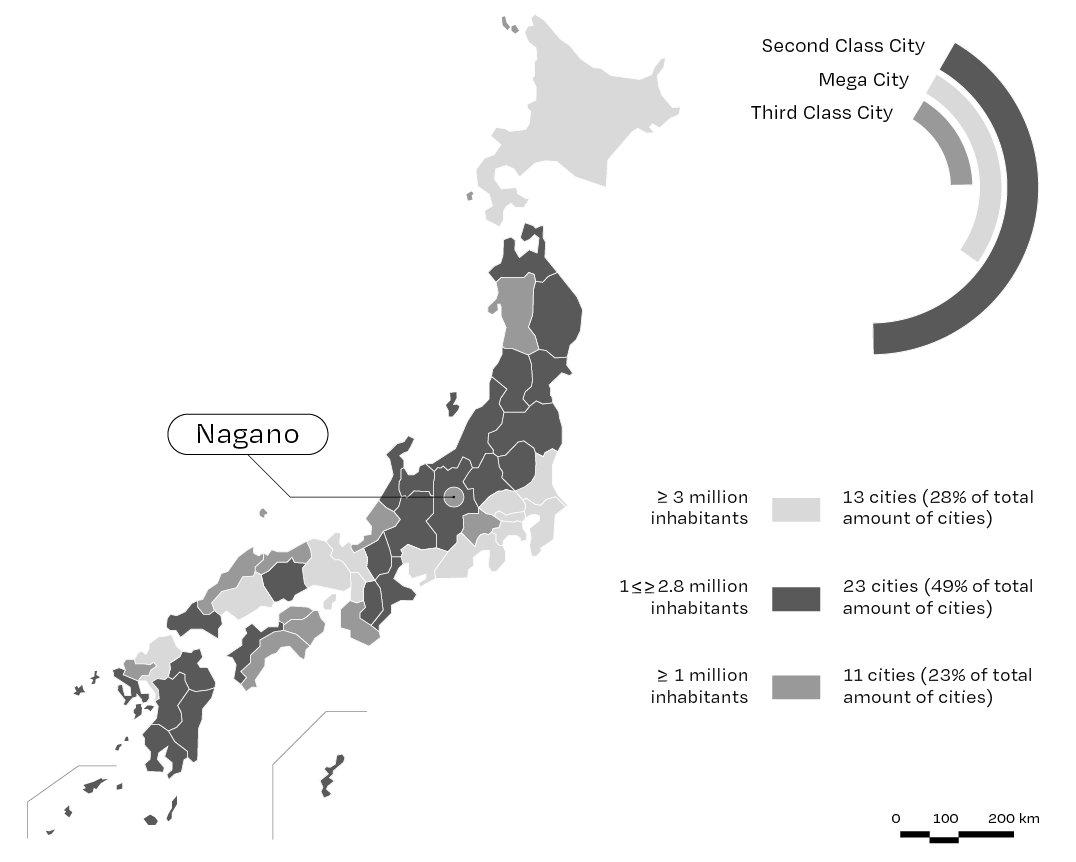
Following the 1970s, both "immigration and emigration rates of the regional population decreased by approximately 30%" (Nishioka et al. 2011, 10). The majority of residents relocated to major urban centers—such as Tokyo, Kanagawa, Osaka, Aichi, Saitama, Chiba, Hyogo, Hokkaido, Fukuoka, Shizuoka, and Ibaraki—all of which have populations exceeding three million (fig. 2).
Figure 2_ Largest population by prefecture. Source: WorldAtlas.
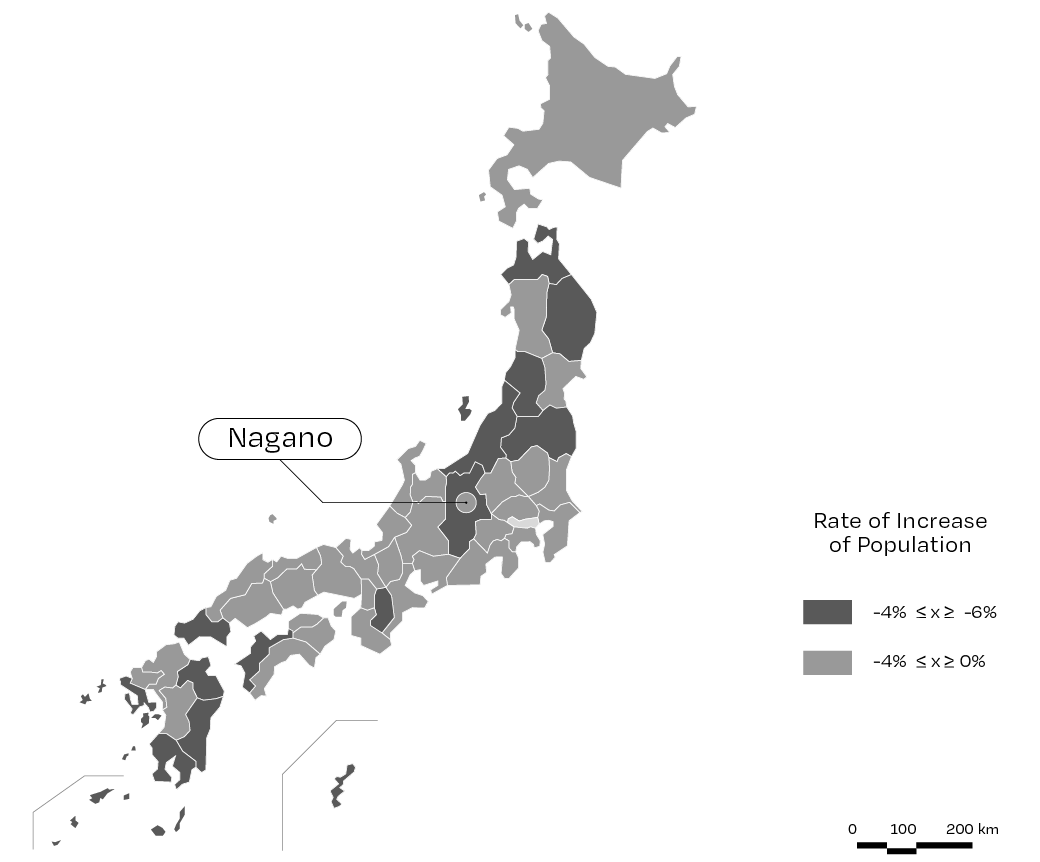
To identify the dominant trend among so-called shrinking cities, this research examines the number of prefectures experiencing population decline over successive census periods. From 2005 to 2010, the population decreased in 40 prefectures; this number rose to 42 prefectures between 2010 and 2015, and to 45 between 2015 and 2020. As of the 2020 census, only Tokyo and Okinawa had not experienced a population decrease. However, projections indicate that Tokyo will begin to see a decline between 2020 and 2025, followed by Okinawa between 2025 and 2050 (fig. 3).
Figure 3_ Decrease in population by prefecture (interpretation by the author). Source: National Institute of Population and Social Security Research.
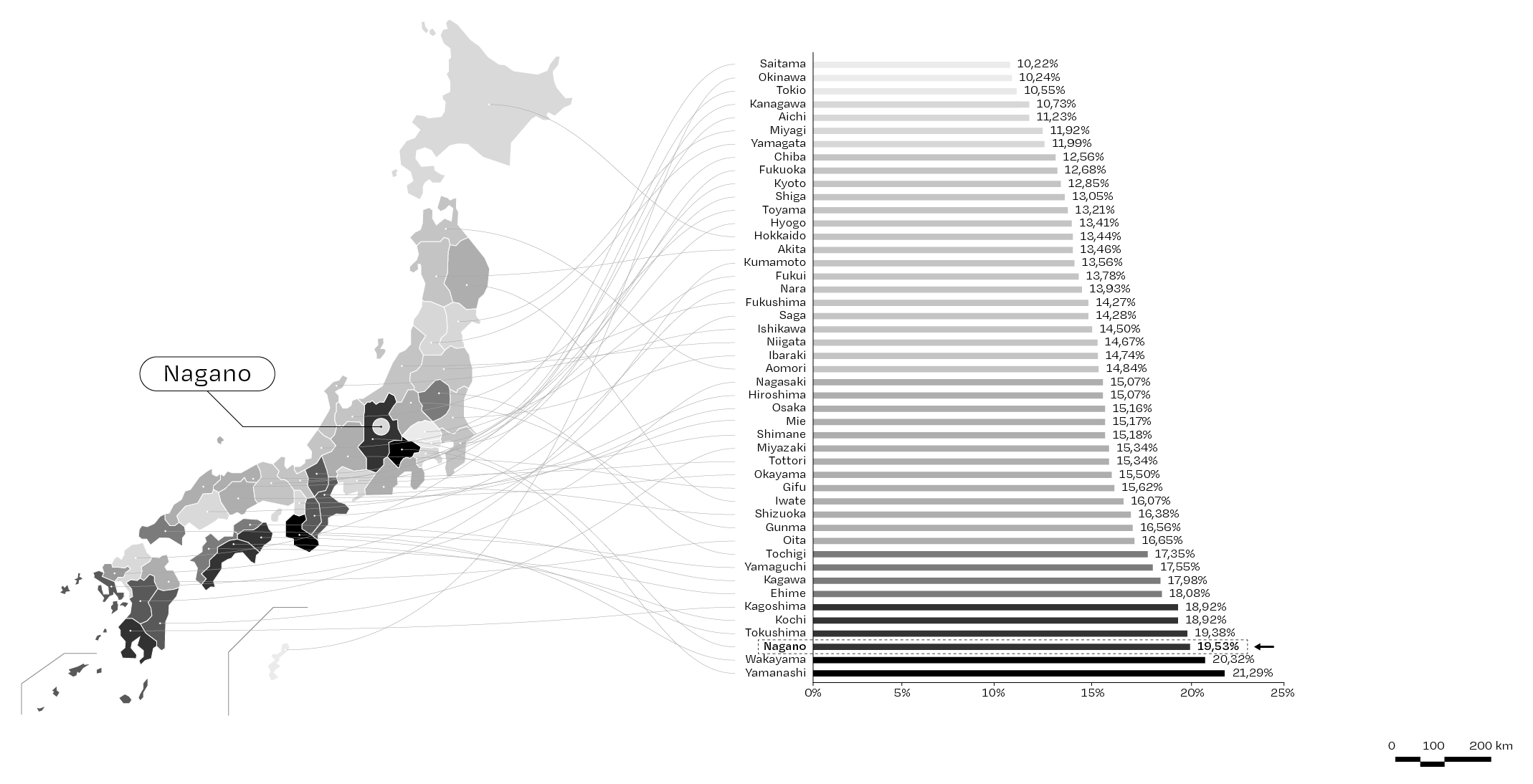
Since 2010, Japan has entered a period marked by population decline and a rising number of vacant houses—an issue that has become a significant social concern at the national level. The city of Nagano, the focus of this study, reflects this trend, with a vacancy rate of 19.53%, notably higher than the national average of 13.55% (Statistics Japan 2018). Each year, the number of abandoned lots continues to grow, as many sites remain unused following the demolition of uninhabited homes, resulting in areas of vacant land (fig. 4).
Figure 4_ Temporal trend in the percentage of vacant housing units by prefecture. Source: Statistics Japan.
As a consequence of the aging population, the number of single-person households composed of elderly residents is steadily increasing, highlighting the need for greater involvement of younger generations in neighborhood activities to foster community cohesion. One widely adopted strategy to address this challenge is the establishment of community gardens on vacant lots left behind by demolished homes. These activate underutilized land and serve as a means of strengthening community networks.
case study: the machi hata project
The Machi Hata Project,3 led by Professor Kosuke Sakura, is a social experiment organized by the architecture laboratory at Shinshu University aimed at transforming abandoned areas in the city of Nagano, located in Nagano Prefecture. Conceived as a "citizens' garden," the project provides a space for collaborative engagement between students and local residents. While construction activities typically require specialized knowledge and entail certain risks—thus limiting broader community participation—particularly vulnerable groups such as children and the elderly face even greater barriers to involvement. In response, the project incorporates inclusive design strategies that actively promote participation across all sectors of the population.
The program's objectives are as follows:
To implement an educational innovation model based on design-build methodologies.
To promote student learning through practice-oriented projects grounded in community dynamics.
To explore the reappropriation and reactivation of abandoned spaces as a strategy for urban regeneration, facilitated through collaboration between students and local residents.
To engage with urban space using sustainable practices, emphasizing material reuse and recycling through upcycling processes.
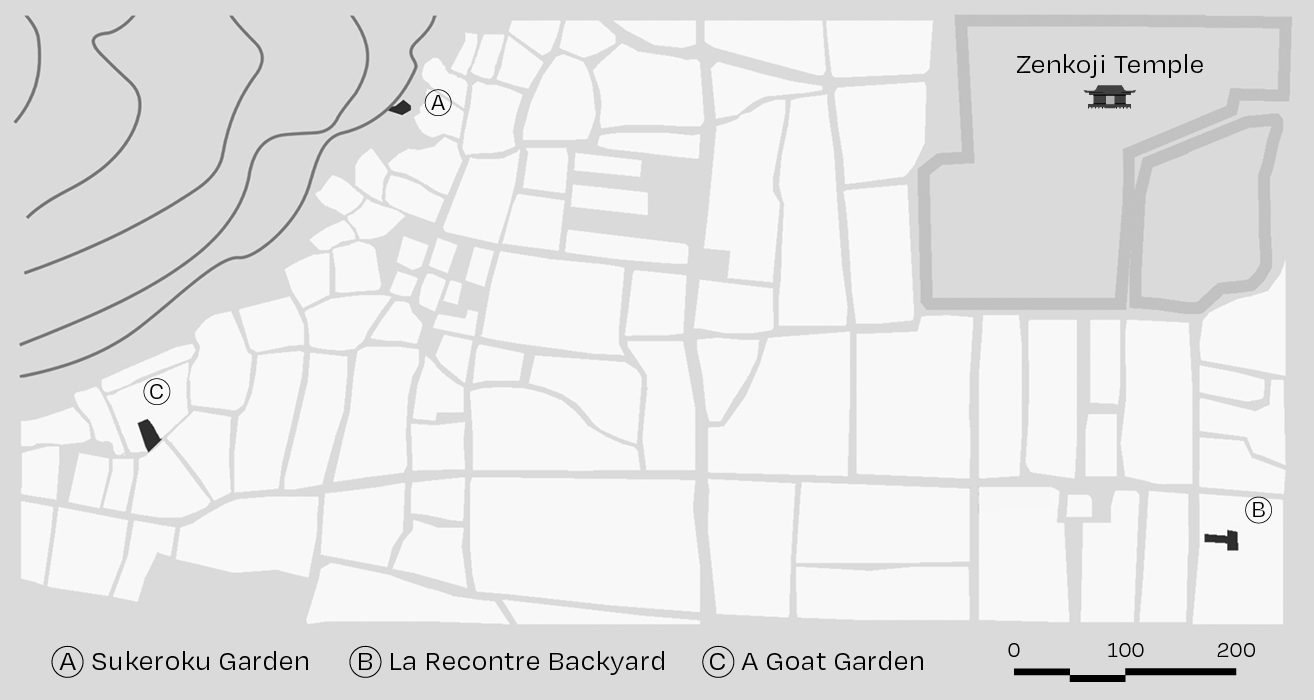
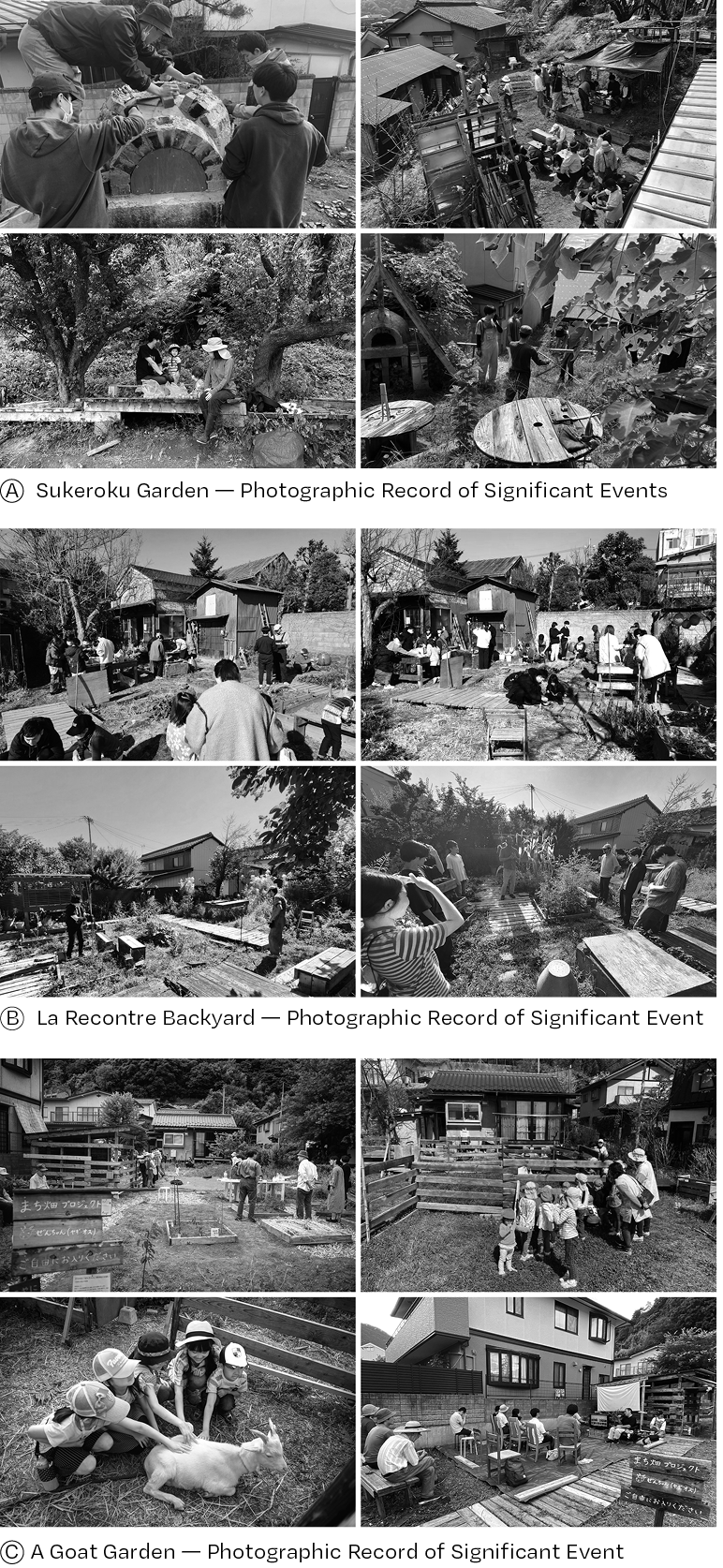
The program, which remains active today, encompasses three pilot sites that have served as foundational case studies (fig. 5). The first initiative, Sukeroku Garden, launched in 2016, involves the renovation of an abandoned historic building alongside the transformation of its adjacent garden. The second project, La Rencontre Backyard, focuses on repurposing an unused garden next to a French restaurant named La Rencontre. Its objective is to establish a closed-loop food cycle—restaurant kitchen waste - composting - vegetable cultivation - use as food—through the creation of a green space that combines landscape design with sustainable food practices. The third initiative, A Goat Garden, extends beyond agricultural use to foster social interaction among local inhabitants. It includes the construction of a goat shed and the care of goats, which originally served to clear and fertilize the land. Over time, the site has evolved into a semi-public space where both young and elderly members of the community participate in caring for these animals.
Figure 5_ Location of the three urban spaces (Sukeroku Garden, La Rencontre Backyard, and A Goat Garden) repurposed by the Machi Hata Project and photographic record of their activities. Source: the authors.
In the Machi Hata Project, students engage in service-learning (SL) by intervening in three vacant areas, each connected to surrounding buildings, fields, and infrastructure. This project can be classified as linear design–build education as opposed to point-based design–build education.
case study. sukeroku garden
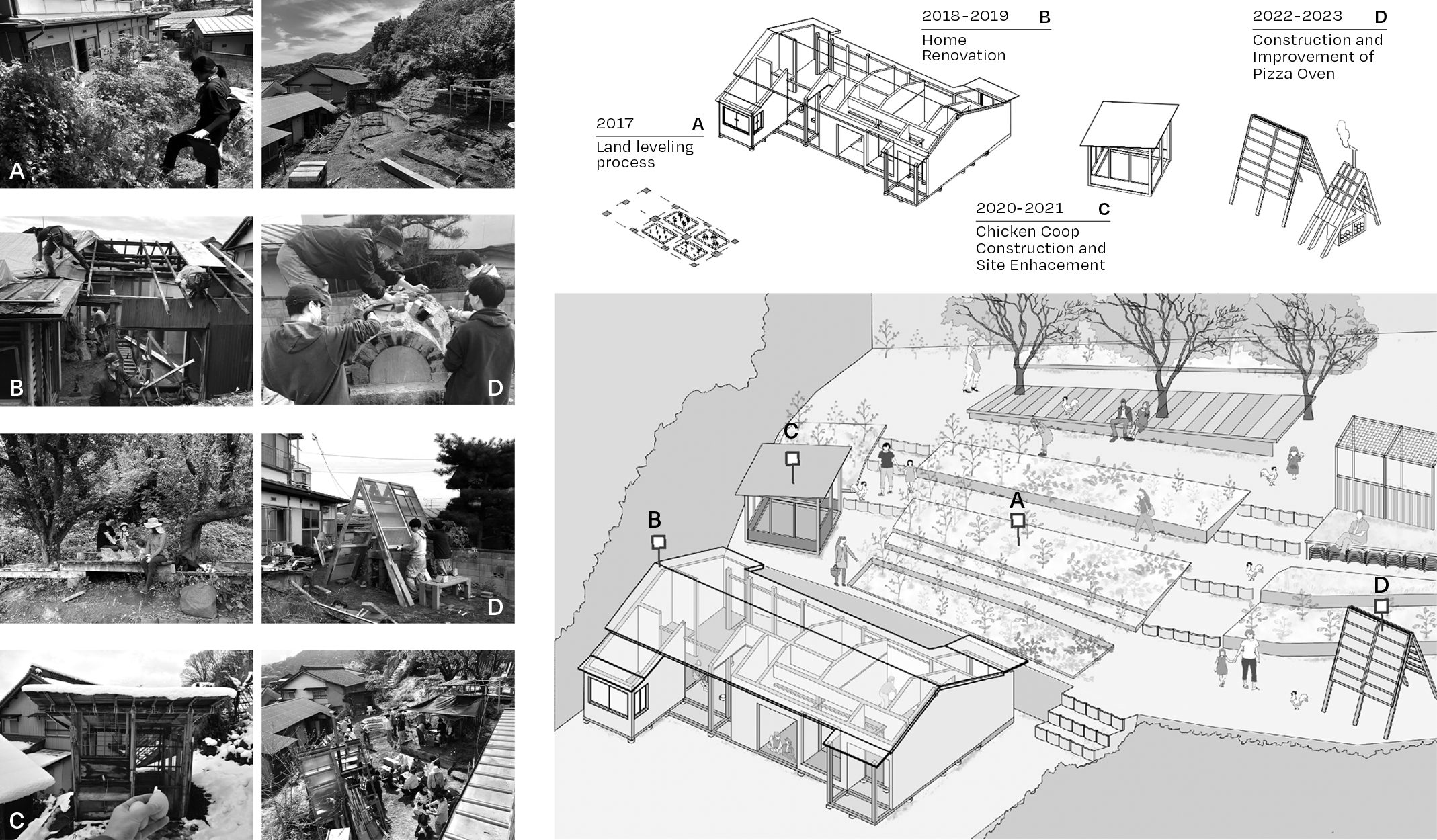
This article examines the intervention carried out in Sukeroku Garden, a site composed of a vacant house over one hundred years old, a 300 m² sloped lot, and a small existing apartment building. The project, which began in August 2016 and was developed in successive phases, combines the rehabilitation of the abandoned house with the transformation of the adjacent vacant land. The evolution of Sukeroku Garden has been characterized by material improvements, a steady increase in participant engagement, and the expansion of its network of contacts (fig. 6).
Figure 6_ Evolution of the Sukeroku Garden renovation. Source: the authors.
A service learning (SL) design–build methodology has been used, structured around the following sequential phases:
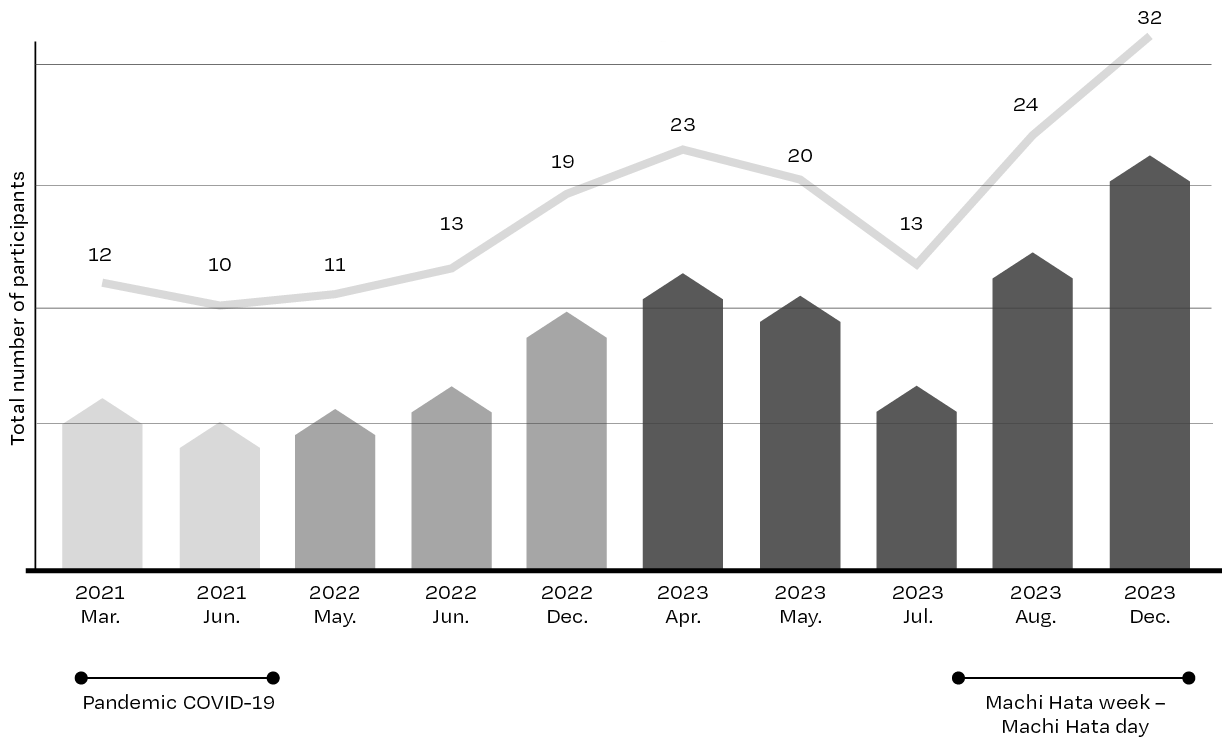
Site selection: This phase involved a quantitative analysis based on photographic records collected since 2016, complemented by participant-generated questionnaires (fig. 7). The analysis was further enriched by qualitative outputs, including diagrams that trace spatial transformations over time (fig. 8).
Figure 7_ Evolution of participants in the activities. Source: photographic records and questionnaires.
Figure 8_ Evolution of space intervention in Sukeroku Garden over time. Source: the authors.
Appropriation of space: Initiated in 2016, this phase was marked by a performative intention, whereby occupying the space enabled the development of theoretical ideas alongside the first transformations.
Stakeholder involvement: This phase brought together academic actors—professors and students from various disciplines—and local community members, including associations, collectives, and resident volunteers.
Design processes: These encompassed both analytical work and preliminary constructive proposals, grounded in academic learning and intended for practical application through on-site interventions.
Participatory construction process: In the absence of a formal laboratory at that time—due to the author's recent appointment at Shinshu University without an established lab—the process began in 2016 with five volunteers—students and community members—undertaking foundational tasks such as clearing and leveling the land. This initial effort led to the participation of architects, editors, small business owners, and neighbors. In 2017, work extended to the building itself, with repairs to roof leaks using traditional techniques. In 2018, improvements were made to enhance natural lighting and ventilation, and roof tiles were repurposed to create steps in the cultivation area and reinforce soft ground. By 2019, the network had expanded to include entrepreneurs and academics interested in the creative reuse of materials. That same year, a traditional oven was built using recycled materials from the demolished house, including the original roof tiles as a structural base. The project also began receiving wood donations from a food company, enabling the construction of more complex structures. In 2020, a chicken coop was built using donated materials, with the collaboration of neighbors, stakeholders, and farmers. In 2021, the oven was renovated with bricks and concrete, incorporating guidance from masons and participation from local youth with experience working in pizzerias.
Communication and outreach: In subsequent years, the growing network increased the project's visibility. Coverage in a local newspaper drew attention from students at other universities, including the Department of Agriculture, whose students contributed expertise on crop cultivation. Since 2022, participation has further diversified with the inclusion of international students and foreign residents.
The evolution of the Machi Hata Project—particularly through the development of Sukeroku Garden—demonstrates a shift from a focus on spatial and material reuse to the establishment of an experimental learning environment for architecture students. In this context, the concept of "network" encompasses not only spatial transformation but also the cultivation of social relationships. This dual dimension reflects architecture's inherent service-oriented nature and highlights the essential role of community interaction and collaboration in the development of such initiatives.
machi hata week
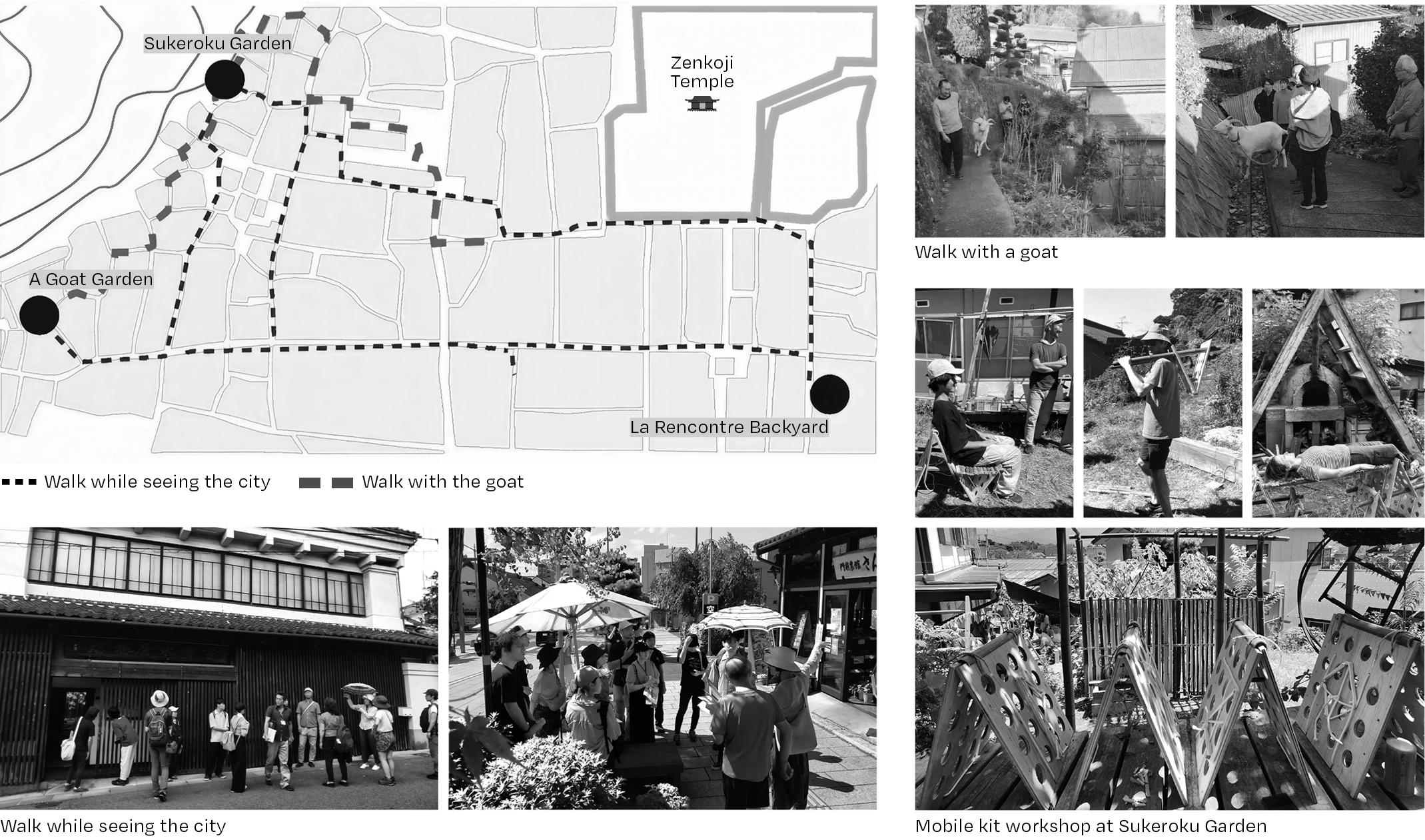
Until 2022, the three pilot projects functioned as learning opportunities for student-led design and construction activities. Each site operated autonomously, engaging distinct groups of social actors. In an effort to foster integration and strengthen community ties, Machi Hata Week was organized from August 21 to 27, 2023. Planned over the course of the year, this event brought together the three project sites and featured the participation of renowned architects and authors as guest professors.4
The activities included tours of the three project sites as well as other areas of the city, facilitating a rediscovery of Nagano's historical memory. In addition, a multifunctional mobility kit was designed and built using bamboo harvested from the surrounding environment. This intervention reflected the project's pedagogical approach, integrating theoretical, technical, and constructive knowledge with practical, hands-on experience. The kit functioned both as furniture for the urban garden and as an activation device during the Nagashi Somen festival—a local celebration deeply rooted in the neighborhood's collective memory.
Machi Hata Week demonstrated the potential of the educational design–build networked model, particularly in addressing the often delicate processes of social integration. As a result of this initiative, the Machi Hata Project evolved into a more cohesive educational program structured around a networked approach (fig. 9).
Figure 9_ Spatial network diagram. Source: the authors.
During Machi Hata Week, participants were able to engage with the management of urban space according to their individual interests. Students focused on design and construction contributed to the development of the mobility kit, while those interested in agriculture planted herbs and incorporated them into food preparation. Participants drawn to management and organization established connections with various local organizations and groups involved in urban initiatives of across Nagano. In collaboration with R-Depot—a second-hand furniture company known for offering guided tours of lesser-known areas of the city—a walking tour was organized. Meanwhile, students with academic interests took part in debates with guest professors, who shared insights from similar projects in other cities. In this way, Machi Hata Week not only facilitated the integration of the three pilot sites into a unified network, but also offered diverse learning and collaboration opportunities. Ultimately, the event strengthened the relationship between architecture, urban management, and community engagement.
The impact of Machi Hata Week was also evident in the increased participation in the Machi Hata Project. Since the event in August 2023, the number of participants has continued to rise, with a significant surge observed in December 2023—a trend that has persisted since September 2024.
conclusions
The Machi Hata Project in the city of Nagano demonstrates the potential of architecture as a pedagogical tool through the application of design-build methodologies to urban regeneration. The intervention in underutilized spaces—such as Sukeroku Garden—has provided students with hands-on experience in environmental transformation, combining architectural rehabilitation with social engagement and community-based management and creating a replicable model.
The case of Sukeroku Garden occupies a central role within the Machi Hata Project, as it has evolved from a basic initiative focused on material reuse and vacant land activation into an experimental learning laboratory. Here, students not only acquire technical skills but also develop innovative strategies for sustainable construction and urban management. This progressive process encompasses learning in construction and recycling practices, the application of environmental strategies, and the creation of multidisciplinary collaborative networks. The networked approach has demonstrated not only the spatial potential for transformation, but also the capacity to strengthen community ties and foster the collective construction of the urban environment.
In this context, Machi Hata Week has marked a pivotal step in consolidating the project as a comprehensive educational model. The interconnection of the three sites—Sukeroku Garden, La Rencontre Backyard, and A Goat Garden—has enabled the creation of a learning ecosystem in which participants can engage with diverse areas of interest, ranging from construction and design to urban space management and agriculture. Activities such as the development of a multifunctional mobility kit and the organization of urban walks have fostered community engagement, reinforcing the role of design and architecture in the everyday life of the city.
In comparison to other design-build models, the Machi Hata Project stands out for its focus on the regeneration of consolidated urban spaces. While many initiatives prioritize technical training, Machi Hata places equal emphasis on the construction of social networks and the pursuit of long-term community impact. Its adaptable and scalable framework offers a replicable model for other urban contexts facing similar challenges.
However, the continuity and long-term sustainability of this type of project depend on the implementation of monitoring systems capable of evaluating its tangible impact on the community. Such mechanisms are essential for assessing outcomes and understanding the project's influence on both the urban and social structure.
Ultimately, Machi Hata reaffirms the role of architecture as a catalyst for social transformation and as a foundation for networked education. Its evolution from a localized architectural intervention to a dynamic learning model demonstrates that urban regeneration extends beyond the recovery of physical spaces—it involves the creation of dynamics of interaction and learning that strengthen the social structure. In a context marked by growing urban obsolescence, initiatives such as Machi Hata offer new perspectives on architectural education, reinforcing the idea that architecture is not only about building structures, but also about building community.
bibliography
De Certeau, Michel. 2007. The Practice of Everyday Life. Mexico City: Universidad Iberoamericana.
Delport, Hermie E. 2016. "Towards Design–Build Architectural Education and Practice Exploring Lessons from Educational Design–Build Projects." Doctoral dissertation. Cape Peninsula University of Technology.
Gravalos Lacambra, Ignacio, and Patrizia Di Monte. 2014. "La Reprogramación de la Ciudad: Consideraciones Urbanas y Sociales en Torno al Programa 'Estonoesunsolar'" [The Reprogramming of the City: Urban and Social Considerations Surrounding the 'Estonoesunsolar' Program]. Ciudad y Territorio. Estudios Territoriales 46 (179): 127–137.
Gravalos Lacambra, Ignacio, and Patrizia Di Monte. 2022. "New Paradigms of the Unfinished City: The Reactivation of Abandoned Spaces through Temporary Uses." Ciudad y Territorio. Estudios Territoriales 54 (214): 799–812.
Harvey, David. 1977. Urbanismo y Desigualdad Social [Social Justice and the City]. Madrid: Siglo XXI.
Jacobs, Jane. 2011. The Death and Life of Great American Cities. Madrid: Capitan Swing.
Kawasaki, Mitsuyoshi, Yuki Takemura, Tsuyoshi Seike, Atsutaka Ryokawa, and Akiko Okabe. 2019. "Study of an International Design–Build Project: Case of the Cultural Center in Chamanga, Ecuador." AIJ Journal of Technology and Design 26 (62): 359–364.
Lefebvre, Henri. 1975. The Right to the City. Barcelona: Peninsula.
Lefebvre, Henri. 2013. The Production of Space. Madrid: Capitan Swing.
Mockbee, Samuel, and D. K. Ruth. 2018. Rural Studio. Educating Citizen Architects. https://ruralstudio.org/.
Moran Alonso, Nerea, and Agustin Hernandez Aja. 2011. "Historia de los Huertos Urbanos. De los Huertos para Pobres a los Programas de Agricultura Urbana Ecológica" [History of Urban Gardens: From Gardens for the Poor to Ecological Urban Agriculture Programs]. Paper presented at the 1st State Congress on Urban and Peri-Urban Agriculture. Elche, Spain. May 6–7.
Moran Alonso, Nerea. 2009. "Huertos y Jardines Comunitarios" [Community Plots and Gardens]. Boletin CF+S (40): 1–23.
Nishioka, Hachiro, Shiro Koike, Masakazu Yamauchi, Keita Suga, and Yuji Esaki. 2011. "Population Projection by Prefecture in Japan: 2005–2035. Outline of Results and Methods." The Japanese Journal of Population 9 (1): 1–39.
Palma, Maritza, Jimena Alarcon, and Lucia Navarrete. 2021. "Design-Based Learning in University Training." Interciencia 46 (6): 248–255.
Quesada, Miguel Angel, and Antonio Javier Matas Arroyo. 2018. "El Huerto Urbano como Herramienta de Transición Socio-Ambiental en la Ciudad" [The Urban Garden as a Tool for Socio-Environmental Transition in the City]. Paradigma (21): 4–11.
Sansão Fontes, Adriana, João Pedro Pina, and Larissa Martins de Paiva. 2021. Urbanismo Tático: X Ações para Transformar Cidades [Tactical Urbanism: Ten Actions to Transform Cities]. Rio de Janeiro: Editora UFRJ.
3Machi is the Japanese word for 'urban,' and hata means 'garden.'
4 During Machi Hata Week, the guest authors included Asuka Nakamura, owner of Natural Recipes Kitchen; Yugo Sato, owner of the Nokai Kitashinshu clinic; Masayoshi Maruyama, a bamboo craftsmanship specialist; Tamami Masuzawa, owner of Nanographica Café; and Patrizia Di Monte and Ignacio Grávalos, architects specializing in the revitalization of vacant urban spaces.