How to Cite: Lopez-Ortego, Ana María, Harold Guyaux and Viviana Parada Camargo. "Urban Negotiations in Experimental Governance Exercises for the Right to the City: Notes on the Experience of the Arquitectura Expandida Collective". Dearq no. 38 (2024): 14-23. DOI: https://doi.org/10.18389/dearq38.2024.02
Urban Negotiations in Experimental Governance Exercises for the Right to the City: Notes on the Experience of the Arquitectura Expandida Collective1
Ana María Lopez-Ortego
ana@arquitecturaexpandida.org
Arquitectura Expandida Collective
Harold Guyaux
harold@arquitecturaexpandida.org
Arquitectura Expandida Collective
Viviana Parada Camargo
viviana@arquitecturaexpandida.org
Arquitectura Expandida Collective
Received: April 10, 2023 | Accepted: October 12, 2023
This article presents three types of experimental urban governance projects (Cano Blandón, 2021) led by the Arquitectura Expandida Collective in collaboration with various grassroots urban movements. These projects are characterized by the principles of the right to the city (Lefebvre, 1969) and radical and insurgent territorial planning (Miraftab, 2009). (1) Collaborative self-construction projects explore organizational forms for the self-construction and self-management of cultural spaces. (2) They engage in tactical provocation seeking to dynamize urban negotiations with different urban agents in situations of high conflict in public space through the use of furniture. (3) Collective cartographies play a significant role, as diverse urban languages — including hip-hop, agriculture, urban sports, or community cinema, among many others — are used to analyze the contradictions between urban culture and urban planning culture.
Keywords: Grassroots urban movements, right to the city, experimental governance, bottom-up urbanism.
introduction and theoretical framework
Citizen participation in public policy is a legal imperative in Colombia, particularly in the urban and territorial sphere, where it has primarily been focused on institutional contribution (Schneider and Welp, 2013). Such institutional participation has often taken the form of providing general information or, at best, non-binding consultations, positioning it at the lowest end of Arnstein's (1969) well-known participation scale. Many authors have observed that "the design of spaces has not been geared toward co-management, veto power, or genuine engagement in public policies" (Hernández 2010, 91)2.
Beyond these institutionalized participation efforts, there are numerous grassroots movements that employ intricate and diverse strategies of collective action in pursuit of the right to the city, aiming to rebalance power dynamics both in the streets and within urban politics. Some authors refer to them as "experimental urban collectives" (Montero et al. 2023), in contrast to other forms of institutional initiatives or multilateral organizations.
This research has systematically compiled data from thirteen projects, each falling into one of three categories, based on the contextual relationships: (1) Self-construction of cultural self-management spaces promoted by grassroots movements entrenched in territorial contexts with a strong culture of participation, heirs of informal urbanization, and processes involving the social construction of habitats; (2) tactical provocation, in contexts marked by high levels of social conflict, control, and the violation of basic rights in public spaces. They use mobile furniture to draw attention to conflicts and stimulate dialogue aimed at establishing fundamental agreements of coexistence among urban actors; (3) collective cartographies that facilitate the analysis and integration of diverse languages, particularly those associated with urban culture and urban planning culture (Delgado, 2011).
These categories are not mutually exclusive; however, for each project, we have determined the category that best represents its primary focus. All of these projects are closely aligned with grassroots urban movements or artistic institutions that emphasize territorial governance (Table 1).
Table 1_ Projects selected for case studies, grouped into categories of self-construction, tactical provocations and collectives' cartographies, 2022. Source: Authors.
Figure 1_ La Potocine. Self-build project in collaboration with the collective Ojo al Sancocho and the support of the Design Museum of London in the framework of the exhibition "Fear and Love: reactions to a complex world." 2016. Source. Authors.
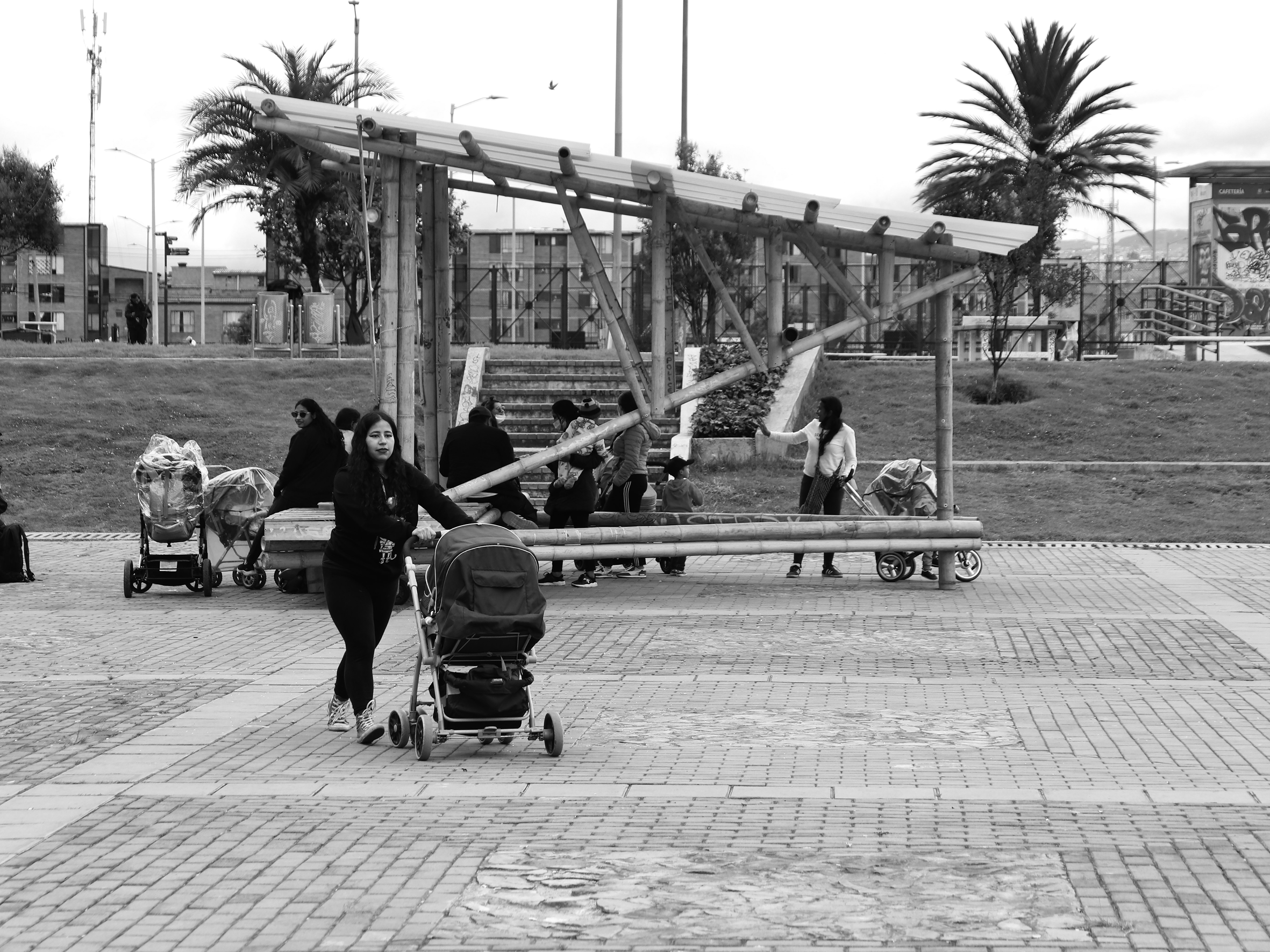
Figure 2_ The Critter (El Bicho). Tactical provocation project. In collaboration with the hip-hop collectives "Golpe de Barrio" and "Distreestyle." With the support of Escultura Local-Bosa grant, 2022. Source: Authors.
Figure 3_ At Risk: the ruruban commons of Alto Fucha. In collaboration with Huertopía collective and the support of the "Bogotá vive natural" grant from the secretariat of culture, recreation, and sport, 2019. Source: Authors.
In all cases, these processes are grounded in Lefebvre's (1969) theoretical framework of the 'right to the city,' which is characterized by the following principles: (1) It emerges antagonistically in response to practices of dispossession driven by vested interests; (2) it can only be realized through collective organization and advocacy, transcending the conventional boundaries of public and private law and cannot be demanded individually; and (3) it is constructed through prototypes, representing a strategy for the direct appropriation of the city through experimental governance exercises. This notion is closely related to:
[...] a form of adaptive, flexible, open, participatory, and informed cooperation that generates provisional and revisable agreements in volatile scenarios. [...] Experimental governance is therefore useful in contexts of high uncertainty and complex interdependence. It tends to appear in matters in which the government cannot regulate an issue completely and in which civil society is involved, as well as a plurality of public and private entities. (Cano Blandón 2021, 137).
This concept connects with that of democratic experimentalism, which seeks to "re-imagine democracy and govern complex societies in which the hierarchical regulatory model has not worked or where there are coordination problems, and to resort, rather, to flexible and contingent arrangements, [...] incremental changes that take into account local diversity and the volatility of problems, characteristic of today's democracies" (Cano Blandón 2021, 136).
Miraftab (2009) reinterprets the right to the city within the context of experimental urban governance practices in the global south, identifying clear parallels with the three characteristics outlined above and thus defining radical or insurgent territorial planning as a practice that is:
[1] Counter-hegemonic. 'It destabilizes normalized relations of dominance and insists on citizen's right to dissent, to rebel, and to determine their own terms of engagement and participation.' [2] Transgressive in time, place, and action, as 'it transgresses false dichotomies by public actions spanning formal/informal arenas (…) It transgresses time boundaries by seeking a historicized consciousness and promoting historical memory of present experiences.' It also surpasses territorial limits by collaborating with organizations in other regions pursuing similar social justice objectives. [3] Creative and imaginative, recognizing 'the symbolic value of insurgent citizenship activities that offer hope from which to work towards alternatives.' (Miraftab 2009, 46)
This definition deepens the counter-hegemonic and therefore interscalar dimension of these practices. Beyond striving for the enhancement of immediate living conditions, they also advocate for structural changes in response to the significant contemporary territorial crises. These challenges include issues like segregation, stigmatization (Wacquant 2007), spatial and environmental injustice (Soja 2000), bodily vulnerability derived from authoritarian and hygienist visions of public space (Butler 2017), and from the dispossession mechanisms available to contemporary urbanism (Marulanda Hernández 2016).
The grassroots approach to urban movements recognizes the organizational capacity within territories, surpassing the ambiguous concept of 'community,' whose identity is defined by neighborhood relations, in favor of 'collectivity,' whose identity is framed in terms of shared objectives. As Delgado states:
The Gemeinschaft, or "community" is associated in [Ferdinand] Tönnies with a type of social organization inspired by the model of family ties, based on inherited and objectifiable social positions, personal relationships of intimacy and trust, corporate bonds, relationships of exchange, and so on.
[…]
The collective, on the other hand, is linked to the idea of a gathering of individuals who realize the value of their co-presence and view it as a means to an end. (Delgado 2008, 1-6)
In the case of grassroots movements, their networking is noteworthy. They are "a network of activists and organizations generating novel bottom-up solutions for sustainable development and sustainable consumption; solutions that respond to the local situation and the interests and values of the communities involved" (Hossain 2018, 63). Their relationship with public institutions is often controversial since they emerge in response to the state's failure in certain areas. "It refers to locally embedded practices, actions and policies that help socially excluded and impoverished individuals and social groups to satisfy basic needs for which they find no adequate solution in the private market or macro-level welfare policies" (Oosterlynck et al. 2013, 2). In any case, grassroots movements have their own agendas, interests, languages, territorial connections, and organizational systems, providing an alternative to top-down citizen participation.
The third element characterizing radical and insurgent territorial planning pertains to the creative, imaginative, and symbolic potential of urban experiences within this type of experimental governance. Notable within this context is not only the diversity of languages at play, typical of urban collectives, such as hip-hop, popular education, territorial memory exercises, sports, or urban agriculture, among many others. Equally significant is the capacity to hybridize with so-called technical languages, among which we find geographic information systems, urban law, legal geography, and territorial planning.
This fusion emerges from the networks of support and solidarity that characterize them and highlights the issue of the power asymmetry granted by specialized language in influencing institutional participation, as well as the challenge for citizen diagnoses that are not founded on specialized languages to penetrate public policies. Consequently, these interventions, aside from focusing on social justice, possess a strong performative approach, generating new urban scenarios and narratives.
methodology
Each project has been analyzed as a case study. All photographic, audiovisual, and archival information associated with the project has been systematically collected. This includes administrative and urban planning documents, historical photographs, and a wide range of materials produced by third parties, such as documentaries, interviews, publications in the press or specialized portals, academic work, museum exhibitions, and awards3.
In order to connect this systematic data collection with the theoretical framework and provide a uniform structure for all the projects, a matrix has been created and replicated in each case study file. This matrix establishes links between the three main categories of the right to the city and radical and insurgent territorial planning. These correlations yield three categories and several subcategories for project analysis, defined as follows: (1) Objectives and counter-narratives; (2) networks and governance relationships among the urban actors involved; and (3) artistic and symbolic aspects of the project, incorporating diverse languages (Table 2).
Table 2_ Conceptual model for the development of research categories between the right to the city (Lefebvre, 1968) and radical and insurgent territorial planning (Miraftab, 2009), 2022. Source: Authors.
New field visits have been conducted to document the physical space and its context. Interviews have also been held without specifying participation quotas, as it has been assumed that grassroots movements have a robust internal structure that can be adequately represented by their movement's spokesperson.
development and discussions
In order to analyze the main discussions that have emerged from the systematization process, we have designed a matrix that combines the conceptual model structuring our research (Table 2) with the categories of projects grouped into self-constructions, tactical provocations, and critical cartographies (Table 1), comparatively analyzing their counter-hegemonic dimension; the collective networks of experimental governance; and the plastic, symbolic, and performative symbolism. The elaboration of this material has served as the basis of a comparative analysis for the conclusions shown below, but it has also been exposed in collective spaces and offered to each of the grassroots urban movements, accompanied by the main files of the systematization.
Figure 4_ Systematized material sheets, 2022. Source: Authors.
Figure 5_ Compiled poster of renderings for systematization, 2022. Source: Authors.
convergences and divergences between self-constructions and tactical provocations as experimental governance exercises for the right to the city
All of the self-constructions have been implemented in informal neighborhoods, where the community dynamics stem from strong governance relationships associated with the social construction of habitats. In contrast, all tactical provocations have taken place in highly segregated and "ghettoized" neighborhoods of formal origin, such as gated communities for low-income housing, where the neighborhood's organizational systems are weak and social conflict are prevalent and hierarchically managed. This hierarchical regulation may stem from the police, public space management authorities on the street, or private sector co-ownership regulations, highlighting a governance problem derived from the urban model of gated communities (Secchi, 2015).
Self-construction initiatives typically do not begin with an initial confrontational counter-hegemonic stance. Instead, they require the creation of a space where alliances and organizational structures are explored to achieve these efficiently, guided by a prior diagnostic process. Friction tends to arise when public institutions, often absent, make their presence felt by requesting explanations (as seen in Casa de la Lluvia), sealing off the space (as in Casa del Viento), or attempting demolition (albeit unsuccessfully, as in the case of El Trébol).
Tactical provocations, however, begin with an acknowledgment of a high level of social conflict that limits the right to the city, particularly for the most excluded and stigmatized sectors of the population. These mobile furniture pieces do not represent the final result of a participatory process; rather, they serve as an initial provocation to spark debates and reach basic agreements on territorial coexistence that do not exclude the most vulnerable. The "urban negotiations" facilitated by these installations encompass not only the direct occupation of public space but also the involvement of socio-institutional roundtables to address issues such as the role of the police and local officials in the stigmatization of young people, media advocacy, and the role of urban management systems in the economic viability of public spaces and their potential privatization. This situation is evident in the case of economic use manuals that govern the management of metropolitan parks in Bogota (IDRD, 2022).
These projects often expose generational community conflicts, particularly between the police and the pedagogical understanding of territorial coexistence. They reveal distrust towards the youth and their ability to establish shared responsibilities through self-management. As AnadeLina Amado explains:
The objective was to expand the library space and protect it from water and humidity. We also sought autonomy because the community house was not made available to us because we were working with young people in urban arts, which did not align with the conservative mindset of the community council […] The intervention may not have initially been counter-hegemonic, but it eventually became so because it contradicted the conservative thinking of many families due to the people who frequented it: troubled youth who were not accepted in other spaces.4
The level of conflict in projects like La Casa del Viento led to an attack in 2017, resulting in the burning of the structure after six years of intense use5.
Figure 6_ Burned Casa del Viento, 2017. Source: Authors.
Self-constructions possess a sense of monumentality and serve as prominent landmarks within the territory, favored by the use of natural and local materials such as guadua (bamboo) and transparent materials like alveolar polycarbonate. In terms of its territorial scenography, they emphasize a specific location, putting it on the city's map and raising questions related to the right to be seen and recognized as a citizenship condition, the right to a beautiful and representative city, and the pride associated with one's place of origin (Borja and Muxí, 2003). Iván Murcia puts it as follows:
The Casa de la Lluvia is the most significant symbol in Alto Fucha. Its message to the community is clear: 'We are capable of achieving this on our own.' Around the Casa de la Lluvia, various forms of this 'we are capable of doing it on our own' are demonstrated in diverse ways. The emphasis here is on doing things well, beautifully, and durably, creating a powerful symbolic exercise […] Furthermore, the Commission [in defense of Alto Fucha] was established and holds meetings at Casa de la Lluvia. Several individuals, even from neighborhoods beyond La Cecilia, express this: 'Casa de la Lluvia is the symbol of Alto Fucha's resistance.'6
The symbolic dimension linked to collaborative and high-quality endeavors is closely associated with the notion of artisanal value in work. "That signifies an involvement in the work and a quality of the result that go beyond mere survival and is related to what culture brings to the work, conferring it a value […] Modern capitalism has increasingly deteriorated this addition of value" (Sennett 2013, 9).
Figure 7_ Self-construction of la Casa de la Lluvia [of ideas], 2012. Source: Authors.
Figure 8_ Self-construction of The Critter, 2022. Source: Authors.
In the case of tactical provocations, the unique design initially attracts attention, but true appropriation unfolds gradually as it starts to gain significance in relation to the right to the city. What sets these elements apart is their mobility, categorizing them as collective movable assets (rather than real estate), which grants them some degree of exemption from specific regulations. This mobility also facilitates ad-hoc dialogues when neighbors raise concerns, such as the smell of marijuana, leading to agreements that promote territorial coexistence. Additionally, due to the weight of these installations, their mobility requires a collective effort, involving a performative and scenographic exercise in public space.
Figure 9_ The Critter in motion, 2022. Source: Authors.
In both cases, the performative dimension is linked to daily life and the significance of space. In the case of self-construction, the everyday performative aspect is embedded in the act of self-construction itself, while its scenographic significance highlights its singularity in the landscape, signifying a material cultural legacy for the territory. In the case of tactical provocations, the everyday dimension is associated with bodily appropriation, emphasizing the performative power of the assembly of bodies in public space (Butler, 2017). In terms of significance, it underscores the integration with other languages of the social movements involved, such as hip-hop.
Figure 10_ Everyday appropriations of The Critter, 2022. Source: Authors.
Figure 11_ Self-managed hip-hop events at the Critter, 2022. Source: Authors.
In both cases, the urban conflicts that are being examined are associated to autonomy and spatial self-management at a smaller scale. Simultaneously, they forge connections with the metropolitan or regional level, challenging urban crises related to segregation, environmental justice, the mechanisms that allow communities to be expelled through urban planning, the vulnerability of the body due to the abuse of power, and the limitations and lack of influence of spaces for participation in territorial policies.
In some projects, such as "the Critter," poetry and audiovisual art have been essential for explaining stigmatization dynamics through hip-hop in video clips produced by the project itself7. These languages have also facilitated the projects' impact and the issues they raise in the media8.
critical cartographies and the right to the city
Cartography represents a somewhat concealed yet profound and rigorous aspect within each of the self-construction and tactical provocation projects. Researching regulations, decrees, historical precedents, patterns of spatial occupation, perceptions, and community narratives, among other elements, is imperative for grasping the controversies and tensions between urban culture and urban planning culture.
Each project maintains a repository of research materials, yet there are instances where cartography assumes a leading role within collective projects. These shifts are often prompted by intense concerns related to territorial matters. In the case of "Salto Sucio (Dirt Jump)" the project was initiated in response to the Local Mayor's Office of Bosa demolishing the Dirt Jump BMX track, which had been constructed and self-managed by young people for over a decade. The "At Risk"9 project emerged from the Alto Fucha community's need for a deeper understanding of the impacts of risk management policies in their neighborhoods. It also aimed to establish regulatory frameworks to facilitate the community and environmentally-driven rehabilitation of degraded and abandoned lands. "Mapeo al Pedazo: Perro Barrio"10 (Mapping the territory: neighborhood dog), on the other hand, took shape during a pandemic, fueled by concerns regarding public space access, particularly for a population dependent on scavenging, and growing concerns about police control and abuse in this context.
These cartographies are, therefore, inherently counter-hegemonic, with a strong emphasis on bridging the gap created by specialized language, often excluding the most vulnerable populations from participating in discussions about the territorial transformations occurring within their urban areas.
experimental governance as a refuge
Finally, it is worth noting that, in all the interviews held, when asked about the primary purpose of these spaces, the key theme that consistently emerged was the need for a refuge, a shelter, a home, and a place where they could be themselves.
[Casa del Viento] Within families, intergenerational issues often come to the fore, and these spaces provide a respite, a place where I can speak openly and be myself. Families tend to be quite conservative, while the younger generations come with a more open outlook, influenced by the internet, social networks, cell phones... Internal conflicts arise, and they often manifest in issues like substance abuse, which can be quite challenging.11
[Potocine] "The goal is to offer a community resource, to bring cinema where it's lacking. But it's also to meet up, relax, hang out, laugh, have fun and listen... It's about fostering community bonding, creating, and reaching consensus."12
[La Casa de la Lluvia] "If we were to describe this project in one word, it would be 'TRANQUILITY.'"13
[El trébol de todos y todas] "The primary objective of El Trebol is to provide spaces for the western areas of the city. Over time, it transformed into something more. It has become a house, a home. The notions of home and shelter are highly significant. The idea of emotional refuge..."14
[El Bicho] "It's a home, a hideout for the community that inhabits this space, for the people who use the street. It's even a shelter from the rain. It also serves as the living room for [the collective] Distreestyle... it has become a cause, a source of enjoyment that brings people together."15
[COMMUNAUTÉ] "The environment is crucial to humanity; it can make us happy or unhappy. When the Arquitectura Expandida Collective embarked on a project here, it brought about a transformation in the atmosphere."16
bibliography
- Arnstein, Sherry. 1969. "A Ladder of Citizen Participation." Journal of the American Institute of Planning Association 35 (4): 216-224.
- Borja, Jordi and Zaida Muxí. 2003. El espacio público: ciudad y ciudadanía. Barcelona: Electa.
- Butler, Judith. 2017. "Vulnerabilidad corporal, coalición y la política de la calle." Nómadas (46): 13-29.
- Cano Blandón, Luisa Fernanda. 2021. "Los límites de la justicia dialógica en la protección de los derechos sociales en Colombia." Revista Derecho del Estado (49): 131-158. https://doi.org/10.18601/01229893.n49.08.
- Delgado Ruiz, Manuel. 2008. "Lo común y lo colectivo." Conferencia en Los jueves de Medialab-Prado. Madrid. https://www.yumpu.com/es/document/read/12753593/lo-comun-y-lo-colectivo-manuel-delgado-medialab-prado (Consultado el 26 de noviembre de 2022).
- Delgado Ruiz, Manuel. 2011. El espacio público como ideología. Madrid: Los libros de la Catarata.
- Hernández, Andrés. 2010. "La participación ciudadana en Bogotá, 1990-2010. Discursos, trayectorias, expectativas y limitaciones." Colombia Internacional (71): 85-107.
- Hossain, Mokter. 2018. "Grassroots Innovation: The State of the Art and Future Perspectives." Technology in Society 55 (Nov.): 63-69. https://doi.org/10.1016/j.techsoc.2018.06.008.
- Instituto Distrital de Recreación y Deporte (IDRD). 2022. "Guía para el acceso y uso del sistema distrital de parques." https://www.idrd.gov.co/parques
- Lefebvre, Henri. 1969. El derecho a la ciudad. Barcelona: Ediciones Península.
- Marulanda Hernández, Alejandra. 2016. "Expulsiones. Brutalidad y complejidad en la economía global de Saskia Sassen." Iconos. Revista de Ciencias Sociales (56): 221-224.
- Miraftab, Faranak. 2009. "Insurgent Planning: Situating Radical Planning in the Global South." Planning Theory 8 (1): 32-50. https://doi.org/10.1177/1473095208099297.
- Montero, Sergio, Ryan Anders Whitney & Isabel Peñaranda. 2023. "Experimental Urban Planning: Tensions Behind the Proliferation of Urban Laboratories in Latin America." Planning Theory & Practice 24 (3): 1-16. https://doi.org/10.1080/14649357.2023.2262420.
- Oosterlynck, Stijn, Yuri Kazepov, Andreas Novy, Pieter Cools, Eduardo Barberis, Florian Wukovitsch, Tatiana Sarius and Bernhard Leubolt. 2013. "The butterfly and the elephant: local social innovation, the welfare state and new poverty dynamics." ImPRovE Discussion Paper (13): 1-46.
- Schneider, Cecilia and Yanina Welp. 2011. "¿Transformación democrática o control político? Análisis comparado de la participación ciudadana institucional en América del Sur." Iconos. Revista de Ciencias Sociales (40): 21-39.
- Secchi, Bernardo. 2015. La ciudad de los ricos y la ciudad de los pobres. Madrid: Los libros de la Catarata.
- Sennett, Richard. 2013. Artesanía, tecnología y nuevas formas de trabajo + "Hemos perdido el arte de hacer ciudades" (entrevista de Magda Anglès). Barcelona: Katz Editores.
- Soja, Edward W. 2014 [1996]. En busca de la justicia espacial. Valencia (España): Tirant Humanidades.
- Wacquant, Loïc. 2007. Los condenados de la ciudad: Gueto, periferias y Estado. Buenos Aires: Siglo Veintiuno Editores.