
How to Cite: Cifuentes Quin, Camilo Andrés. "Learning from the Fun Palace: Five Lessons for an Ephemeral and Enduring Architecture". Dearq no. 39 (2024): 14-22. DOI: https://doi.org/10.18389/dearq39.2024.02
How to Cite: Cifuentes Quin, Camilo Andrés. "Learning from the Fun Palace: Five Lessons for an Ephemeral and Enduring Architecture". Dearq no. 39 (2024): 14-22. DOI: https://doi.org/10.18389/dearq39.2024.02
Camilo Andrés Cifuentes Quin
Universidad de La Salle, Colombia
Received: July 7, 2023 | Accepted: January 29, 2024
In a context of ecological crisis, one of the major challenges of architecture is to provide sustainable and enduring solutions. The challenge is even greater considering that contemporary societies are characterized by permanent transformation. In the 1960s, Cedric Price designed the Fun Palace, a building which, conceived as a temporary event, became a referent from which lessons can be drawn to envision an ephemeral and enduring architecture. The aim of this article is to identify principles from the Fun Palace for a sustainable practice of the profession, resonating with the demands of the current ecological crisis.
Keywords: Sustainable architecture, flexibility, modularity and adaptability, Fun Palace, Cedric Price.
The greatest challenge of contemporary architecture is likely to be resolving the contradiction between durability and transitoriness, as announced by the title of this issue. Considering the urgencies of our time (climate change, environmental pollution, deforestation, loss of biodiversity, resource scarcity), the spaces we design must be sustainable.1 Nowadays, sustainability and durability are considered related concepts, as both refer to the need to ensure that resources are used in a way that guarantees long-term general well-being. Thus, the design of durable products or systems promotes sustainability by minimizing the need for frequent replacement, thereby reducing the quantity of resources required to produce them. However, one characteristic of contemporary societies is that everything in them changes at a dizzying pace. According to the sociologist Zygmunt Bauman, what characterizes current society is precisely that nothing in it maintains the same form for long; Bauman calls this liquid society (2013).
Ben Highmore accurately describes what it means to live in a liquid society. For the author, modernity "is the experience of being caught in, and at times overwhelmed by, dramatic changes" (2005, 12). The same happens to architecture. In a liquid world, buildings become obsolete2 artifacts long before they complete their life cycle. Thus, the challenge for architects today seems to be designing a built environment that adapts to the dynamics of a constantly changing world, while ensuring that the spaces we design are durable. Architecture must have the ability to mutate at the same pace as society to respond to changing conditions during its lifespan. In other words, architecture must be an oxymoron: ephemeral and enduring.
In the 1960s, Cedric Price conceived a project that, although never built, has inspired several generations of architects.3 The project in question is the Fun Palace, a building designed to house a cultural center in London that questioned the traditional conception of such facilities. Crucially, it resolved the apparent contradiction between the ephemeral and the enduring. The project was born in 1962 when Joan Littlewood, searching for a venue for her theater company, asked Price to design a space that was flexible enough to accommodate a wide range of activities, from theater and dance to lectures and exhibitions. This is how the architect and the producer began working together on a project for "a theater of pure performativity, a space of cultural bricolage where people could experience the transcendence and transformation of the theater not as audience but as players" (Mathews 2006, 40).
In line with this vision, the designed project consisted of a three-dimensional matrix that could accommodate a series of activities not prescribed by a specific architectural program or form. In this sense, rather than a building in the traditional sense of the term, what Price imagined was a kind of scaffolding that could automatically transform according to variable use conditions. According to Littlewood, the project was characterized as the opposite of a permanent structure: "nothing is to last more than ten years, some things not even ten days: no concrete stadia, stained and cracking, no legacy of noble contemporary architecture, quickly dating" (1964).
While Price argued that the Fun Palace was solely a response to the British context of the 1960s and considered it nonsensical outside of that context, some of his proposals resonate with the concerns of contemporary architectural practice. Indeed, conceived more as a temporary event than as a static structure, the Fun Palace project incorporates principles of adaptability, modularity, and formal and programmatic indeterminacy. These make it a reference point of interest for envisioning an architecture suitable for the sustainability needs of our time. From this perspective, contrary to Price's beliefs, the Fun Palace is a relevant architectural concept and a model from which several lessons can be drawn. The objective of this article is to identify a series of principles within the aforementioned project for imagining an architecture that is both ephemeral and enduring. These are in accordance with certain tenets of sustainable architecture.
When Littlewood approached Price to design a theater for "pure performativity", the architect's response was to conceive a building that clearly departed from the traditional idea of what a cultural center was. Instead of a fixed and static space, Price envisioned a system that could constantly change and adapt to the needs of its occupants (figs. 1 and 2). To achieve this goal, Price not only challenged the prevailing concept of cultural center but also reconsidered certain aspects of traditional architectural practice. In fact, the project reflects Price's particular attitude towards the practice of the profession, as he argued that conventional architectural practices lead to "the safe solution and the dull practitioner" (Price 1984, 54). For Price, the antidote to conventionality is creativity which, in his own words, is "generated and sustained through a delight in the unknown" (1984, 54). This attitude is materialized in his conception of the Fun Palace project, which involves a way of resolving the relationship between function and form in the building, between space and structure, and ultimately between the built object and its users, that reflects a new sensitivity to disciplinary issues.

Figure 1_ Perspective view of the project for the Fun Palace. Source: Cedric Price fonds. Canadian Centre for Architecture.
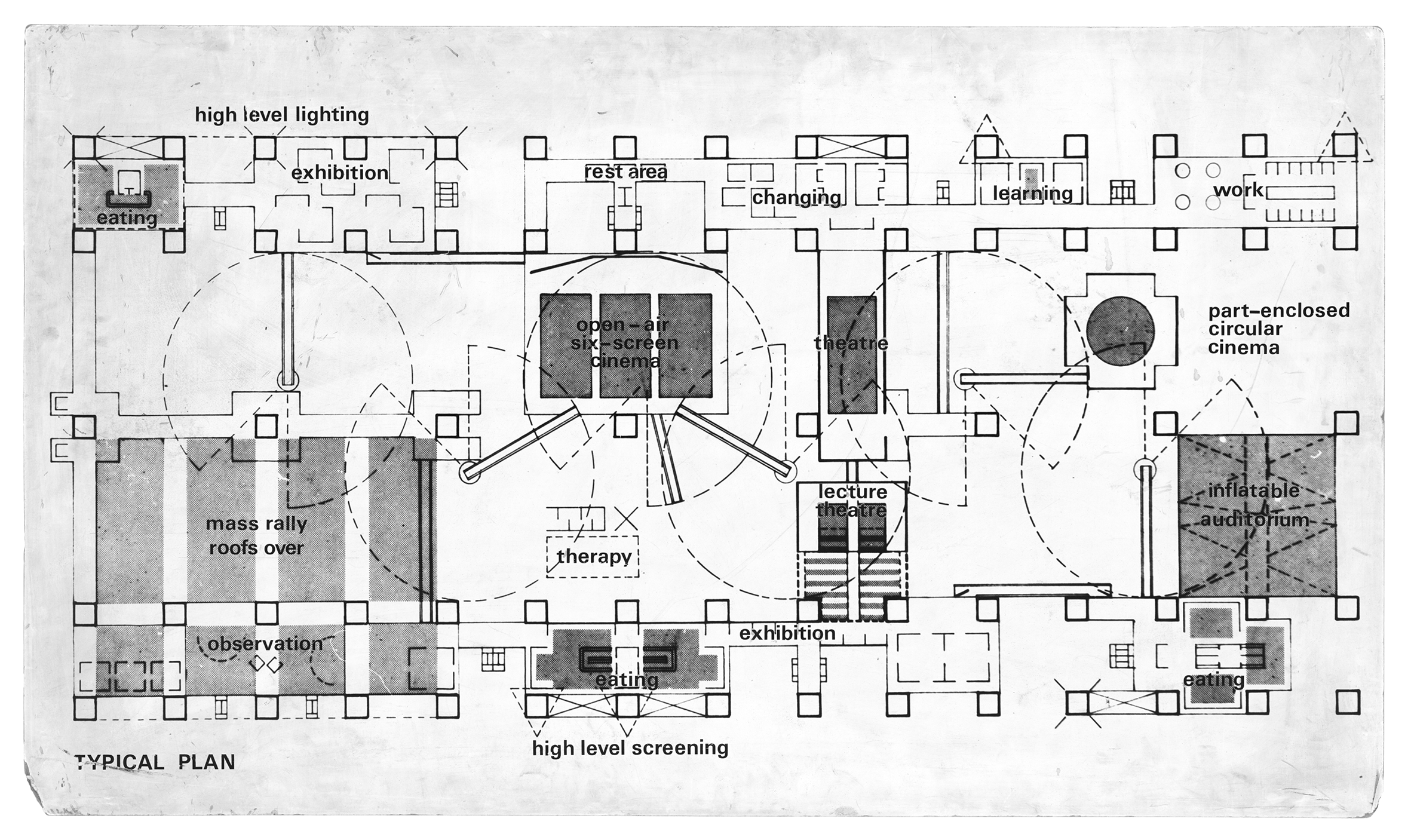
Figure 2_ Schematic floor plan of the project for the Fun Palace. Source: Cedric Price fonds. Canadian Centre for Architecture.
A fundamental aspect that sets the Fun Palace apart from the traditional conception of a building is that neither the program nor the form of the building is predetermined in the proposed project. In fact, the project was born from the premise that the building should not host preconceived events for a general audience, but rather respond to the changing needs of the users. Since it was not possible to know what those needs would be in advance, the program had to be open. Thus, rather than a program in the strict sense of the term, what the project designers defined were a series of criteria that the building should meet, as well as an inventory of activities that the building could eventually accommodate (fig. 3). These activities were related to the intention of creating a building to promote education, entertainment, technology awareness, cooperation, inclusion, and accessibility. Among the activities that the building should facilitate, detailed in extensive lists by Price and his collaborators, were cultural expressions such as music, art, dance, and theater, but also recreational and sporting activities such as dining, skiing, karting, archery, drinking, bowling, swimming, photography, restoring old cars, and even having sex. The list also included the possibility of creating virtual realities within the building. These included, among others, a maze of silence, a kaleidoscope grotto, and a cybernetic cinema which, as Stanley Mathews suggests, evoke the proposals of surrealists and situationists (Mathews 2005).

Figure 3_ Diagram representing the variety of activities that could take place in the building and the conception of the architectural object as scaffolding for these activities. Source: Cedric Price fonds. Canadian Center for Architecture.
As the building had to accommodate a wide variety of unforeseen functions, the developed project does not describe a defined form, but rather a flexible construction system for the realization of a wide range of potential events. In this sense, Price's proposal departs from the widely accepted idea among modern architects that function determines the form of a building. Contrary to this view—and in resonance with the ideas propagated by cyberneticians such as Norbert Wiener and William Ross Ashby—the system projected by Price more closely resembles an organism that evolves and adapts to a changing context than a static object. It is worth noting that the cybernetician Gordon Pask was one of Price's closest collaborators in the development of the project, and his contribution was decisive not only for the conception of the control systems required by the building but also for the conceptualization of the building as a kind of open system.4
To achieve the high degree of flexibility needed for the building, Price designed a modular construction system composed of a reticular steel structure. This structure creates a large open space where different spatial solutions could be configured to meet the changing usage needs described in the program. Within this structure, there is a set of interchangeable and movable components (floor surfaces, walls, ceilings, and stairs) for creating different types of spaces. These components would be controlled by a system of sensors and motors to reorganize them in response to the needs of each moment. Additionally, the design included the implementation of a complex environmental control system to adjust the temperature, lighting, and other conditions of the building in real-time, according to emerging usage conditions.
The designed building is an artifact with an industrial appearance, ultimately resembling more a factory than a cultural center. However, as Mathews points out, the project's image does not stem from a strict pursuit of form and aesthetics: "the three-dimensional structure of the Fun Palace was the operative space-time matrix of a virtual architecture" (2006, 45). In this sense, the constructive and material aspects described in the building's design aimed to create a scaffold to accommodate an architecture that could be almost any architecture.
The conception of the building as a sort of virtual machine—namely as a system that can organize itself in various ways to generate an indefinite number of spatial configurations—is the product of a radically different construction of the relationship between the building and its inhabitants. In contrast to the ideals of order, clarity, and standardization typical of modern architecture, Price's project seems more connected to values such as difference, versatility, and complexity, characteristic of a postmodern sensibility. Indeed, the Fun Palace was not designed for an ideal user, nor does it promote a mode of use determined by the designer. The conception of the building as an open system is the product of considering the particularities of its users as the starting point of the design. In fact, if the project for the Fun Palace is considered today to be a paradigmatic example of "performative" architecture, it is because it starts by considering its potential users as "performative" subjects. That is, as beings whose actions affect and are affected by a specific environment. In the Fun Palace, the inhabitant is an active agent who is part of a form of organization in which the building and the user are conceived as parts of the same system. Here, the influence of cybernetic thought on the conceptualization of the project appears clearly. In accordance with this framework, the building was conceived as a system that should receive information from its inhabitants and adapt accordingly to respond to their needs. Considered as an open system, the building is not regarded as a normative artifact that frames the actions of an average person, but rather as a mediation artifact that must guarantee the emergence of different usage conditions defined by active and diverse users.
While Price's central concern when designing the Fun Palace was primarily oriented towards producing a fundamentally democratic cultural space, the designed project describes a type of building that, in light of current concerns, appears as a paradigmatic example of architecture in which the contradiction between the ephemeral and the enduring is resolved. Below, a series of central aspects of the project are mentioned, from which five lessons are extracted for envisioning an architecture capable of responding to the challenge of creating transient and enduring buildings.
As seen, in order to talk about the Fun Palace, it is necessary to use concepts such as adaptability, flexibility, behavior, virtuality, and emergence. These concepts evoke the opposite of notions like stability and rigidity, which in Western tradition have been associated with the solid and immutable nature of buildings. However, they have been challenged by recent discourse and methods of sustainable design. Crucially, the project for the Fun Palace describes a particular type of building, in which firmness is not synonymous with immobility and transience is not synonymous with obsolescence. The fundamental premise of Price's proposal was to create a building that could adapt to the changing needs of its users and that, in consequence, had to incorporate uncertainty. This characteristic is based on a conception of the building as an open system that receives and processes information from its environment so as to adapt to it. This construction of the architectural object implies, first of all, a departure from the traditional conception of the program. Instead of defining a series of predetermined functions and spaces, the program is understood as the spectrum of possible activities that could take place in the building. Corresponding to this idea of an open program, the Fun Palace was designed as a space that can be permanently reconfigured to accommodate a wide range of uses.
The consequence of rethinking the idea of architectural program is the redefinition of the relationship between form and typology. Typically, architectural form has been conceived in relation to defining a series of functions and identifying spatial types adapted to those functions. Price's project departs from this way of resolving the relationship between use, form, and space. Indeed, the design does not prescribe a specific form but rather the interactions among a system of components whose aggregation allows for the combination of different architectural types in a single multifunctional space. In this sense, the project for the Fun Palace describes a building of open typology, capable of transforming itself to generate diverse forms adapted to a variety of emergent uses. The conception of the building as an adaptable system includes a critique of the elitist and exclusive conception of cultural institutions. In opposition to this approach, Price conceived the Fun Palace as a mediation artifact that does not determine, but rather makes possible, the forms of spatial organization required to accommodate the activities defined by the users. Thus, it is the users who determine the form and use of space through their actions. Consequently, the Fun Palace was not intended to be a passive stage for a series of predefined activities, but rather the site of interaction among the inhabitants, and between the inhabitants and the space.
The corollary of considering the building as an experience for an active user is to envision a space in constant transformation. The possibility of permanent transformation, according to the space occupancy criteria defined by users, is ensured in the Fun Palace through the implementation of a modular construction method. Ultimately, the implementation of principles of modularity guarantees the flexibility and adaptability of the building. This refers to the capacity to adjust to the spatial and atmospheric needs of emerging events and activities.
In summary, there are five principles that should be considered to envision ephemeral and enduring architecture inspired by the Fun Palace:

Figure 4_ Descriptive diagram of the open program principle. Source: author's own elaboration.

Figure 5_ Descriptive diagram of the open typology principle. Source: author's own elaboration.

Figure 6_ Descriptive diagram of the active user principle. Source: author's own elaboration.

Figure 7_ Descriptive diagram of the modularity principle. Source: author's own elaboration.
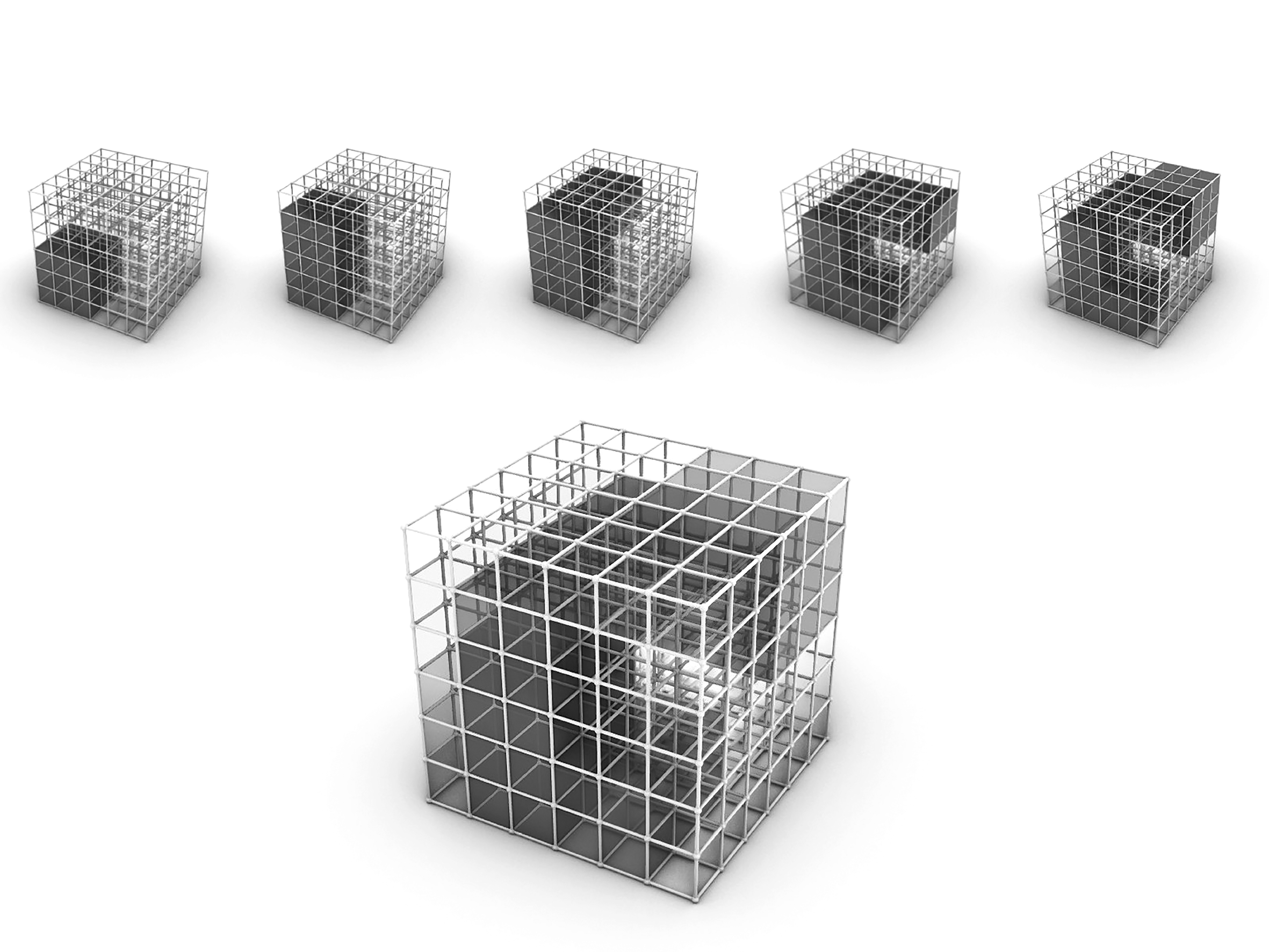
Figure 8_ Descriptive diagram of the flexibility and adaptability principles. Source: author's own elaboration.
The reflection posed by this article starts with the following premise: architecture must adapt to the dynamics of a liquid world, where everything changes incessantly, but where it is urgent that designed objects are sustainable and enduring. This apparent contradiction is resolved in Cedric Price's project for the Fun Palace where, as seen, the architect rethinks issues such as the relationship between function and form in the building, between architectural space and structure, and between the built object and the user. These reflections materialize in the development of an architectural concept (incorporating principles of programmatic and formal indeterminacy, flexibility, modularity, and adaptability, as well as community participation) that make the Fun Palace an interesting example of ephemeral and enduring architecture, and therefore sustainable.
According to contemporary discourse on sustainable design, it is now a necessity for buildings to be conceived, among other considerations, as adaptable, dismantlable, reusable, and recyclable systems. These principles allow architecture to articulate with different aspects of sustainable development (environmental, economic, and social sustainability), as they promote the rational use of natural and financial resources required for the production of habitable space. They also allow for the conception of transformable spaces that strengthen a society's capacity to sustain itself over time and space. Although such considerations were not at the origin of Price's project, the design principles underlying the development of the Fun Palace align with current needs for sustainable development in various ways. For example, the flexibility and adaptability of the system promote the transformation capacity of built environments for minimizing waste and meeting the changing needs of society. The idea of creating a multipurpose space capable of hosting a wide variety of activities is also consistent with the principle of resource optimization and the minimization of constructing specialized structures for different purposes. Regarding social sustainability criteria, Price's approach towards the active participation of users in shaping the space relates to the importance of inclusion as a factor that ensures long-term sustainability. The conception of the building as a temporary event that transforms according to the users' needs is crucial, as the attention paid to the inhabitants' experience ensures that the facilities adapt to emergent and unforeseen situations.
This last point is fundamental because, as mentioned by economist Clive Spash, a real socio-ecological transformation requires activating mechanisms that allow for the construction of alternative solutions to the dominant system. This implies exploring other types of economies based on sharing, cooperation, care, and non-monetary forms of exchange (Spash, 2020). Correspondingly, a truly ecological architecture, in addition to offering technical solutions, must facilitate ways of living and relating to the environment that support the systemic changes required by society. Crucially, this is also a lesson that can be learned from Price's work. In his project for the Fun Palace, the proposed technical solutions are not an end in themselves but a means for thinking about another type of space. As seen, the project expresses a critique of the conception of culture as the domain of elites, and describes an alternative to fostering its democratization through the production of people-centered architecture. In this sense, the conception of the building as an open system not only redefines the traditional way of understanding the spatial, material, and constructive aspects of architecture, but also the logic of space production.
Aside from the technical complexity of the Fun Palace, the conception of the building inherent in the project offers an interesting framework for addressing the socio-ecological transformations demanded by the current crisis from an architectural perspective. In addition to containing a vision of built spaces that resonates with today's environmental concerns, the Fun Palace inscribes an understanding of human beings as agents capable of transforming their environment and of architecture as a means for achieving it. Thus, open architecture emerges as the ideal setting to embrace other, more sustainable ways of life based on values such as cooperation, solidarity, and the importance of the commons.
1 Sustainability is understood as the ability to maintain balance between natural and human systems over time. This concept entails responsible resource management, minimizing negative environmental, social, and economic impacts, as well as striving to address current needs without compromising the ability of future generations to meet their own needs. Within the framework of the reflection presented here, sustainability is understood in all its dimensions, encompassing the interconnectedness of environmental, social, and economic factors, promoting disciplinary practices that ensure resilience and harmony among human communities, the built environment, and the natural environment.
2 When talking about architectural obsolescence, it is understood that both wear-and-tear obsolescence and technical obsolescence can be closely intertwined phenomena. In a context of constant change, architectural objects become obsolete to the extent that they cannot adapt to new social dynamics. If they fail to transform into new forms of use, this leads to their technical obsolescence.
3 The project served as inspiration for the science fiction architecture of the Archigram group, the High-Tech architecture of architects like Richard Rogers and Renzo Piano. More recently it has been revisited as a paradigmatic example of performance architecture.
4 In cybernetic thought, the concept of open system describes a variety of phenomena considered as self-regulated forms of organization, resulting from information exchange processes between a given system and its environment, and reaching a state of equilibrium through this process. See, in this regard, The Human Use of Human Beings: Cybernetics and Society by Norbert Wiener (1988).