
How to Cite: Reus, Patricia and Jaume Blancafort. "An Ethics of Care in the Teaching of Urban Collective Housing Projects". Dearq no. 41 (2025): 115-124. DOI: https://doi.org/10.18389/dearq41.2025.01
How to Cite: Reus, Patricia and Jaume Blancafort. "An Ethics of Care in the Teaching of Urban Collective Housing Projects". Dearq no. 41 (2025): 115-124. DOI: https://doi.org/10.18389/dearq41.2025.01
Patricia Reus
Universidad Politécnica de Cartagena, Spain
Jaume Blancafort
Universidad Politécnica de Cartagena, Spain
Received: November 23, 2023 | Accepted: June 14, 2024
The main objective of this research was to demonstrate that it is both possible and has value to apply the findings of gendered research on collective housing to the teaching of architectural projects. The methodology developed for this purpose began with experiential learning dynamics aimed at raising students' awareness of spatial imbalances regarding care. This was followed by a creative process supported by criteria selected from the scientific literature and systematized by the teaching staff. An analysis of projects, academic outcomes, and student feedback contributed to the experience and enabled opportunities for improvement to be identified.
Keywords: teaching innovation, critical pedagogy, phenomenological learning, gender perspective, chores, architectural projects, collective housing.
Translating the advancements in research and policy frameworks into architectural project planning education should be an essential aspect of academic activity, in order to avoid perpetuating outdated approaches, and ensuring the universities serve as incubators of professionals attuned to the time and the context in which they operate (Calduch 2013). Furthermore, as the principles of critical pedagogy state, there is no neutrality in the act of knowledge transmission, as teaching is an inherently political act (Freire 1997). In this context, the training of students to design buildings has been approached with a commitment to transforming the world (Giroux 2013) into a more sustainable, fair, and equitable place where activities related to care occupy the physical and social space they deserve. This means recognizing care as an essential part of life (Federici 2020; 2013) and acknowledging societal interest in constructing inclusive habitats that facilitate the socialization of domestic work, as it is in the home that the journey towards coexistence begins, and it is the home that sustains behaviors (Muxí 2018; Amann 2005).Therefore, in contrast to traditional, hierarchical models that have historically been designed according to a perspective that views care tasks as invisible and underestimated, an approach that introduces care as an essential part of the architectural problem has resonated with innovative initiatives such as Decree 80/2022, of June 28, which regulates the minimum conditions of habitability and design standards for housing and communal accommodations in the Basque Country (Department of Territorial Planning, Housing, and Transport). This decree is further supported by previous research that has identified and defined a series of criteria that permit imbalances, inequalities, or even subordination in the use of domestic spaces to be made visible (Montaner 2019; Falagán 2019). This regulatory framework reflects the intention that habitability should encompass issues related to care: specifying measures such as a requirement for common areas in buildings for the storage baby chairs, a comprehensive understanding of the laundry process (storing, washing, drying, and ironing) and the provision of personal and general storage spaces within the home, as well as regulations concerning the safety of building access and flexibility, permitting housing units to adapt to different ways of living.
Developments of this kind highlight that it is time to address domestic functions in architectural education. This is particularly relevant given that a significant portion of the homes inhabited by our students have been designed according to patriarchal perspectives on daily life, as hitherto, neither the regulations nor university curricula have recognized the central importance of care. Consequently, in the spaces dedicated to them, domestic tasks are relegated to residual areas, characterized by poorer spatial quality, inadequate orientation, poor lighting, or distance from the central areas of the house—all factors that result in a clear imbalance and have contributed to the invisibility of these activities (Reus, Blancafort, and Camacho 2022).Domestic tasks involve a more intense relationship between body and space than other activities carried out at home, such as sleeping or reading. When we clean, cook, organize or load the washing machine, every action is shaped by spatial dimensions and bodily movements. This requires greater attention to detail to ensure that everything can be achieved comfortably.

Figure 1_ Choreography of Care. Source: Marta Camacho.
This research has sought to update teaching in architecture by introducing topics raised within the framework of research on care in collective housing. For this purpose, a pedagogical experience was designed, tailored to available time and the maturity of the Project 4 students engaged who were its target. The course was implemented during the first semester of the third year of the undergraduate degree course in architecture. After three years of implementation, with an average of forty students per year, the experience was evaluated by comparing the results with those of previous courses, analyzing teachers' reflections and reviewing student feedback.
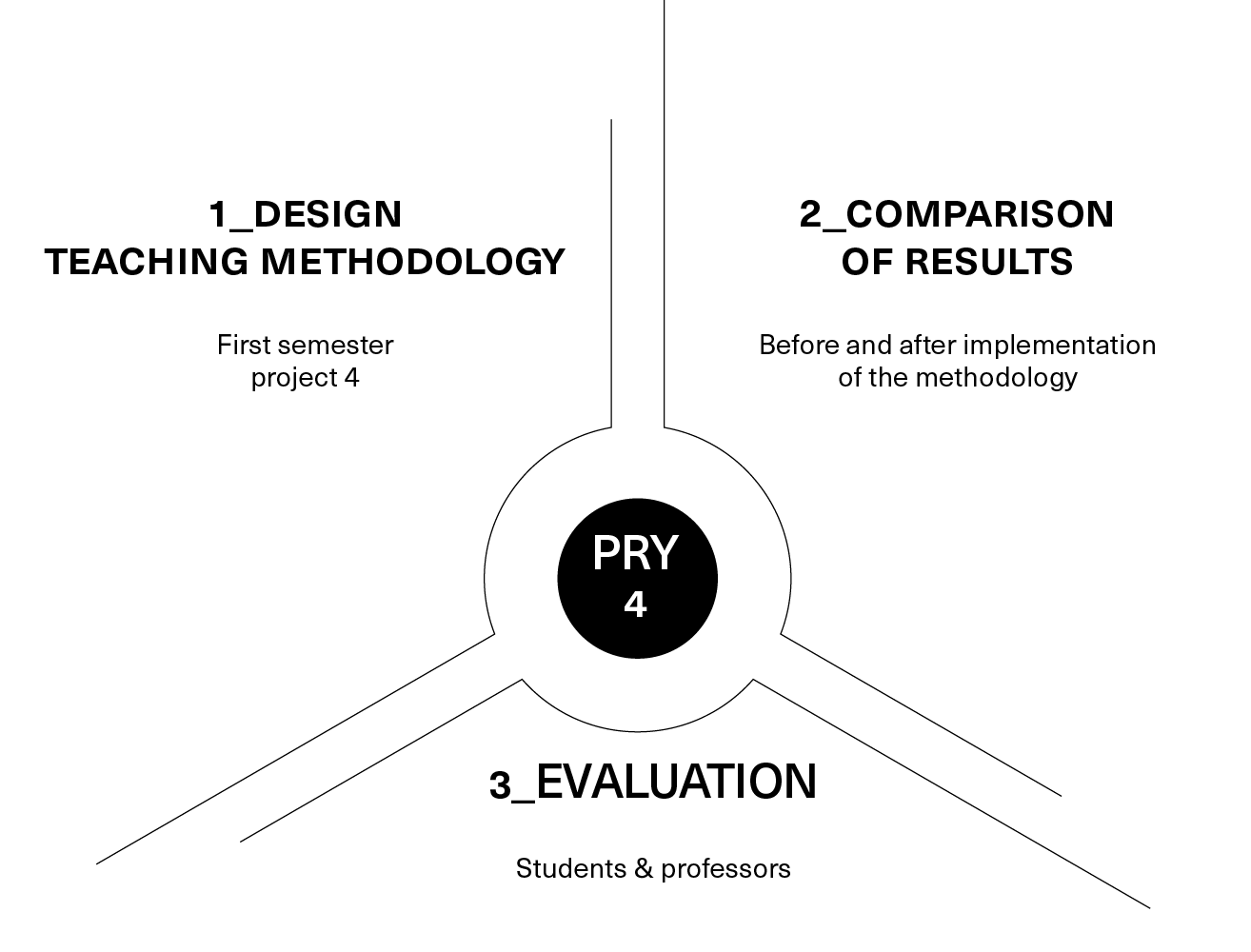
Figure 2_ Research Methodology. Source: the authors.
The pedagogical design was based on the conviction that it is essential to observe all aspects of reality when undertaking any architectural project. The course aimed to provide guidelines for ensuring the dignified treatment of individuals in spatial terms and the socialization of domestic tasks within residential projects.
The course consisted of two didactic units, the first of which focused fundamentally on phenomenological matters, while the second was project-based. The aim was to enable students to identify spatial imbalances in terms of comfort and functionality that occur in cities and in houses during the performance of domestic tasks. The objective was to design spaces capable of entering into dialogue with the urban environment in which they are situated, are attentive to the demands of daily life, and represent a responsible approach to the climate emergency, according to the slogan we care for ourselves, we care for others, and we care for the planet.

Figure 3_ Process and conceptual content. Source: the authors.
This didactic unit involves students in real-world experiences, rather than theoretical exercises. Students observe the relationships between wellbeing and built forms in the city and the home, while engaging in domestic tasks.
Students were tasked, in groups of three or four, with preparing a paella: purchasing the ingredients, cooking, eating it together, and cleaning up afterwards. The exercise was carried out at two different scales: the urban and the domestic. The former involved mapping quantitative and qualitative aspects at the urban scale, allowing for a diagnosis for public spaces in terms of comfort for users engaged in domestic tasks. The exercise invited students to observe the presence and absence of comfort along the route between the place where the cooking would occur to the store or stores where the ingredients were to be purchased. In other words, they were asked to record and analyze distances, exposure to sunlight, whether the routes are pleasant and accessible, if they allow for the combination of this task with other daily activities, if there is community recognition, if the routes are attractive and stimulating, well-lit, how many benches there are along the way, etc.
All these variables were critically examined in light of an awareness of how factors such as mobility, race and gender define peoples' experiences in space. To this end, the students were also asked to observe the behaviors of individuals other than themselves (caregivers, children, the elderly, people with disabilities, people with different functional roles, with sexual or gender diversity, etc.).

Figures 4 and 5_ Urban mapping. Source: students Paloma Gómez del Baño, Ana Consolación Martínez Guillén and Cristina Pagán Agüera, 2023.
Once the data had been recorded and analyzed, a brief tactical urbanism exercise was carried out with the aim of addressing some of the urban planning deficiencies the students had observed.

Figure 6_ Tactical Urbanism proposal. Source: students José Fernández Puerta, Pablo Sáez Valencia and Marina Muñoz García, 2022.
The second part of the teaching unit focused on the domestic level. The students in each group meticulously recorded the dimensions, objects, and feelings that emerged during the process of cooking and sharing a meal.
They were asked to create free-form diagrams to catalog and communicate—in a clear, precise, and attractive way—their reflections on the sense of comfort they felt while preparing and tasting the paella. The projects were summarized in two-minute videos, which were used to stimulate discussion about an experience that aimed to highlight the hierarchies and spatial privileges inherent to collective housing, as well as the factors that contribute to well-being within spaces dedicated to cooking and dining. In other words, based on the experience of producing the paella, discussions revolved around questions of dimension, natural light, ventilation, views, controllable sunlight, acoustics, furniture arrangement, movements, and so on.

Figure 7_ Domestic mapping.
Source: students Elisabetha Bonaguro, Agniezka Jank, Klaudia Kochanowska, Federica Verno, 2022.
After this exposure to daily life in the city and the home, students are required to design a collective housing project, in order to understand the issues surrounding care in inhabited spaces. The project should take into account the city in which it is situated, as well as the demands of daily life, care activities, and the climate emergency. One of the fundamental characteristics of the exercise is the establishment of a progression framework, involving clearly defined milestones that guide the Project 4 students through the design process:

Figure 8_ Collective housing project. Source: student José Fernández Puente.
This pedagogical approach encourages students to engage in domestic design projects by drawing on their personal experiences. This allows them to develop spatial solutions through guided transitional phases. These phases emphasize two main considerations: firstly, the realities of everyday life and collective memory (we take care of each other) and secondly, climate (we take care of the planet). In contrast, when the same project was presented to students using a traditional teaching method, it involved a passive analysis of the site and the study of similar reference projects, which students then attempted to adapt to their own designs. In this traditional approach, learning progression relied solely on critique sessions, resulting in:

Figure 9_ Survey of students, October 2, 2023. Source: the authors.
The surveys conducted among students enrolled in the 2023/2024 course (42 individuals) indicate a high level of acceptance, with over 80% expressing satisfaction with the overall format. Furthermore, the survey reveals a very favorable perception of the usefulness of the content presented in the classroom, as 100% of the students positively rated its utility for developing their projects, and 97% believe that what they learned will be valuable in their future lives as architects.
Regarding the elements that scored lower, two relate more to the timing and composition of groups than to the content itself. This may be due to the novelty of the approach, which was introduced following three terms focused on building projects, or because it involved an environment with more apparent stimuli. Students generally expressed a desire to dedicate more time to exercises at the urban rather than the domestic level. Additionally, the chosen format for presenting the results—flipcharts for the urban level and video for the domestic one—generated controversy. However, in this instance, the responses are not as clear-cut, since some respondents appreciated the introduction of a non-conventional communication format, while others felt overwhelmed by the challenge of engaging with an approach with which they were less familiar.
Finally, the most controversial point was the composition of the work groups. While there was almost unanimous agreement on the value and importance of working with others, it was generally felt that, with four people, the groups in Teaching Unit 1 were too large, as more friction and tension was generated than pedagogical benefit.
The faculty members involved both in daily follow-up and the final sessions positively valued the fact that students were offered values that strive for learning beyond spatial creativity. In fact, in the three years it has been implemented, the increase in the level of development achieved in the projects has become evident, showing greater formal and functional consistency. Although the topic of collective housing is one with which students were already very familiar, they were motivated by the discovery of a new critical perspective. Some difficulties were observed in the domestic mapping exercises, where students struggled to identify imbalances that, due to their everyday nature, become invisible and were accepted as normal (Evans 2005).
These circumstances, high levels of satisfaction and overall performance improvement, are closely linked to pedagogical theories that advocate for teachers to abandon the concept of authority and become facilitators of learning. In other words, the traditional role in which students present their projects and teachers review them has been replaced by a process in which students are set assignments that provide students with insights, allowing them to solve problems that are relevant to their lives (Ference and Vockell 1994). This approach allows students to understand the rationale behind the learning they are undertaking and instills confidence that they are capable of identifying needs, setting objectives, developing their projects, and justifying their decisions.
By introducing a critique of functional imbalances and the absence of wellbeing, the students have been able to generate a spatial narrative that is rich in considerations that allow them to construct a world in which sustainability is not an add-on to architecture but an intrinsic part of it, and where care is not a secondary aspect of life but finds in architecture a supportive setting for the comfort and inclusivity it entails.
The interpretation of the results confirms that a focus on the ethics of care is viable, and that it fulfills not only its role in conveying criteria for an architecture aligned with caregiving tasks and the climate emergency, but also that this educational process—which includes everyday experiences such as shopping, cooking, and eating—has a positive impact on students, who achieve better academic results and evaluate the experience positively. Therefore, implementation should continue. Nevertheless, there are several aspects that could be modified in future versions of the approach to enhance the assimilation of the concepts addressed: