INTRODUCTION
According to Bruton (1997), “teachers and learners in different contexts can become frustrated by the teaching materials they are asked to use” (p. 45). This statement is directly applicable to the situation of a group of students in a public school in Tunja, Colombia. When asked to expand on their feelings towards learning English, these ninth graders expressed that they were self- conscious when speaking English because they had difficulties constructing their ideas in English. In this sense, after applying an initial survey, students stated two main reasons why they did not make progress in English learning as they expected. First, students said that the activities did not favor the development of their speaking skills because they did not have enough opportunities to interact with their partners; instead, they were asked to develop activities focused on structural perspectives and driven in individual ways. Second, students did not find any connection or identification with the materials used to learn English. They specifically mentioned their interest in speaking because it was the most complex skill for them to master, given the difficulties of spontaneous sentence construction, pronunciation, and meaning negotiation. This, because spontaneity and interaction are pillars in oral production.
In this respect, speaking is regarded as a demanding language skill and both teachers and students should strive to achieve progress in the learning process. This is possible by means of negotiating the what and how, because that students want to learn English and the teacher has some advantages in the sense that he/she broadly knows students’ realities and contexts. The fact of valuing contextualized teaching and learning processes relates to a culturally responsive pedagogy as a way to encourage and foster students’ learning process through the integration of their immediate contexts, personal experiences, background knowledge, interests and preferences (Nieto, 2013). Thus, the teaching and learning processes need to be supported by appropriate and contextualized materials that include students’ life experiences as a way to provide them with opportunities to be heard expressing feelings, thoughts and emotions, and thus, begin to develop their speaking skills.
Accordingly, in light of being culturally responsive teachers, there is a need for teachers to design their own materials for teaching English to include students’ academic needs, realities, and contexts, because the few available materials at school do not fulfil learners’ expectations for language learning. In short, teachers at this particular public school know students’ realities and can support the learning process in a contextualized way by including students’ voices and life experiences in the materials. For this paper’s purpose, the word “contextualized” means that learning occurs through the connection of new knowledge to prior experiences, which seems to motivate students to share and talk about their lives, personal experiences and interests. That is to say, students do not assimilate or construct knowledge in a vacuum but rather they relate it to something inherent in their lives to make it meaningful learning (Ausubel, 1968). Hence, students gradually acquire language knowledge which is then easily applied to communicate in everyday situations. Contextualized material elicits the development of speaking because it encompasses students’ surroundings and preferences. The following lines describe the main theoretical bases and studies conducted regarding this research concern, which has not been widely addressed in language teaching.
THEORETICAL FRAMEWORK
This pedagogical experience aimed to design curricular units that included students’ academic needs and preferences in order to enhance speaking English. The three main constructs for this theoretical framework were: speaking, materials development, and curricular units.
Speaking
Everybody has the inherent capacity to speak, as every single person is a social human being by nature. In relation to speaking, there have been several definitions which have changed and evolved over time. Thus, speaking tasks fluctuate from memory-based perspectives to more interactional ones and there has been great emphasis on accuracy and fluency only (Harmer, 2001). In this way, an important aspect of speaking is to be able to communicate feelings, thoughts and emotions. Chastain (as cited in Diaz, 2011), argued that, “Speaking is a productive skill and it involves many components; it is more than making the right sounds, choosing the right words or getting the constructions grammatically correct” (p. 26). This assertion is a reminder that one of the main purposes of speaking is not just to pronounce words correctly but rather to communicate effectively and negotiate meaning with the interlocutors. However, speaking entails some other components that underpin the social dimension because all daily situations carried out by all human beings are mediated by socially-driven interactions in order to construct meaning and make sense of their own realities and world. In this sense, the latter perspective relates to the definition provided by Luoma (2004), when this author asserted that speaking is “as a social and situation-based activity” (p.9). From this, speaking is the result of interpersonal relationships in which interlocutors interact, negotiate meaning, raise awareness of cultural differences, learn mutually, and recognize otherness as vital components in interactional and contextualized-driven situations.
Bearing in mind the interactional and social nature of speaking, there was a need to integrate activities with these perspectives in order to favor the development of such language skill. That is to say that the material needed to be designed according to clear purposes and principles to respond to learners’ academic needs and expectations. In this research study, interaction, engagement, cultural sensitivity, the development of confidence and communication were the main principles guiding the design of the curricular units (Tomlinson, 2003). There was an emphasis on interaction because it is through contact with others that students develop and make sense of speaking tasks on a daily basis. In addition, there is a bigger opportunity for learners to acquire language when they are exposed to interactive activities (Lee, 2004).
In this respect, according to the definition provided by Luoma (2004), the activities included in the curricular units and the ones considered to favor the enhancement of the speaking skill were dialogues, debates, conversations, creative storytelling, and interviews. Then, the criteria for the development of the speaking tasks encompassed the comprehensibility of the utterances produced, meaning-making construction of discourse, interactional use of language, and expressiveness. The relevance of fostering the development of speaking skills relies on the fact that people mainly interact through oral exchanges. In the same way, the process of designing the curricular units took into account certain principles of the communicative approach, in terms of helping learners develop their ability to communicative in the target language (Celce-Murcia, 2001).
Materials development
Materials can be defined as, “Anything that is done by writers, teachers, and learners to provide sources of language input and to exploit those sources in ways which maximize the likelihood of intake” (Tomlinson, 1998, p. 2). This implies going through the process of designing or adapting resources of input (authentic and non-authentic material) to facilitate the learning and teaching processes of language (Tomlinson, 1998). In this sense, teachers and students have to take advantage of using the available material in the best and most appropriate way, trying to personalize learning as one of the main proposals in present-day education. This guarantees a successful teaching and learning process.
In addition to the aspects explained above, there is also a huge diversity in terms of the qualities of the individuals who develop materials for classrooms. Some teachers or writers have more or less experience, expertise, and creativity than others. Materials development requires the availability of time and enjoying materials design. The process of materials development is a challenge for teachers and writers. It demands from them to become accustomed to creating and designing materials that are suitable for students. It is vital to bear in mind that designing materials that are appropriate for students requires reference to students’ levels, interests, and likes, which can be achieved by schoolteachers because they have diverse experiences, different levels of qualification and distinct teaching styles underpinning students’ preferences (Harwood, 2010).
According to Tomlinson (2003), “There is an increase in attempts to personalize the learning process by getting learners to relate topics and texts to their own lives, views and feelings” (p.7). This was at the core of the pedagogical experience when designing curricular units; they must include the topics, activities, skills, and learning styles students expressed interest in as much as possible. The topics that students mentioned were those that they had experience with or through which they wanted to learn English. This statement was the pillar of designing materials so that students felt at ease and enjoyed the learning process through relating and assimilating previous knowledge with new experiences.
In the same way, materials development favors students’ progress and meaningful learning. An important aspect of effective materials development is that it must be contextualized in order to respond to the academic population’s needs as every academic population is unique and has distinct particularities throughout the learning process. Then, heterogeneity needs to be included in language learning. In an ideal situation, the materials give each individual the chance to be heard and express their points of view to make the learning process easier, more interesting, attractive, motivating and challenging. It is also necessary to update the teaching materials according to the way students like to learn and what they need to learn (Núñez & Téllez, 2009). Hence, students’ voices need to be taken into account when making decisions about designing appropriate tools, for them to succeed when learning a foreign language.
Regarding certain research studies conducted in this field, Ramos and Aguirre (2014) stated the importance for teachers to develop their own materials because this provides opportunities to address more inclusive environments in education; there is an opportunity to bridge the gap between school and home, and the development of materials establishes the relationship between innovation and research in this field.
Curricular units
A curricular unit is, among many other definitions, conceived as a set of activities that develops a specific topic from the syllabus (Ariza, 2004). Accordingly, when designing curricular units, one must integrate students’ needs and preferences into the curriculum to build activities that might increase students’ motivation to learn English as a foreign language. The aim of developing contextualized curricular units is to draw on students’ life experiences so they may relate them to the units to make the learning process more interesting while also increasing their confidence to speak.
Gámez and González (2013) use the words “pieces of a textbook” to refer to curricular units, and they further assert that, “Any textbook developed as instructional material is made up of several curricular units” (p.28). Hence, a textbook might be composed of several contextualized curricular units. In other words, through the use of curricular units students should make connections between their background knowledge and the information presented. This is not the first attempt to design curricular units in a contextualized way. Some papers reveal that teachers have been concerned with the content students learn and have made an effort to design materials to include students’ academic needs and preferences. Ariza (2004) designed a curricular unit based on the syllabus and program of a public university in Bogotá. She concluded that the curricular unit was fruitful for students because it supported them not only in terms of language but also in cultural knowledge. Ariza and Viáfara (2008) made remarks on the basic principles to follow when designing teaching materials. Muñoz and Pineda (2008), Núñez and Téllez (2008), Ramos, Aguirre, and Hernández (2012), Ramos and Aguirre (2014) among others, share their experiences designing English Teaching materials in the Colombian context.
In this way, curricular units can be defined as the set of attractive and creative activities for language learning, which at the same time are social mediators that respond to students’ realities and contexts. In this sense, the process of designing such activities of social mediation was framed under the principles proposed by Jolly and Bolitho (2010). The model mainly proposes six steps: identification of the need for materials, exploration of the need, contextual and pedagogical creation of materials, production and evaluation of materials. The process is described in the section of the design of the curricular units.
In line with the role of contextualized materials in the teaching and learning of English, a research study was conducted in rural areas by Ramos, Aguirre, and Torres (2017). They aimed to design contextualized workshops to enhance speaking skills. Findings suggest that contextualization helped learners respect and honor their personal experiences and cultural background. This allowed prejudice reduction, knowledge construction, and relationship-making. In the same way, students improved their speaking skills when they made connections with their lives and prior knowledge. The study by Ramos et.al (2017) is related to the current one in the way of understanding and perceiving language as a means to interact and establish intersubjective relationships.
METHODOLOGY
Research design
Regarding the nature of descriptions, abundance of observations, interpretation and analyses; the present study was framed under the qualitative research paradigm. This because, as stated by Denzin and Linlcon (2005), “the word qualitative implies an emphasis on the qualities of entities and on the process and meanings that are not experimentally examined or measured in terms of quantity, amount, intensity, or frequency” (p.10). In this sense, the researcher can be involved at the inner experience level of participants to better understand the qualities of the phenomenon of developing speaking skills and learning English in a contextualized way.
In the same way, the type of study implemented was action research. The aim of action research is to address an actual phenomenon happening in educational settings. Thus, in this model the teacher-researcher is involved in a participatory, reflective, systematic and critical process in order to improve and reflect upon their teaching practice (Creswell, 2012). In order to implement the action research study, the cycle proposed by Madrid (2000) was adopted, as follows:
Phase 1: Develop a plan of action to
Phase 2: Act to implement the plan.
Phase 3: Observe the effects of action in the context in which it occurs.
Phase 4: Reflect on these effects.
In order to identify an area or phenomenon a needs analysis and observations were made regarding students. From that it was found that students had some difficulties with speaking and the materials did not respond to their needs. After that the curricular units were designed and applied by means of integrating the curriculum and the topics and activities students stated, through the instruments, that they wanted to address. In the third stage, data which emerged from the implementation of the action plan were collected by means of field notes, interviews, and surveys. Finally, data were analyzed in the light of the principles of the Grounded Theory methodology as proposed by Urquhart (2013.
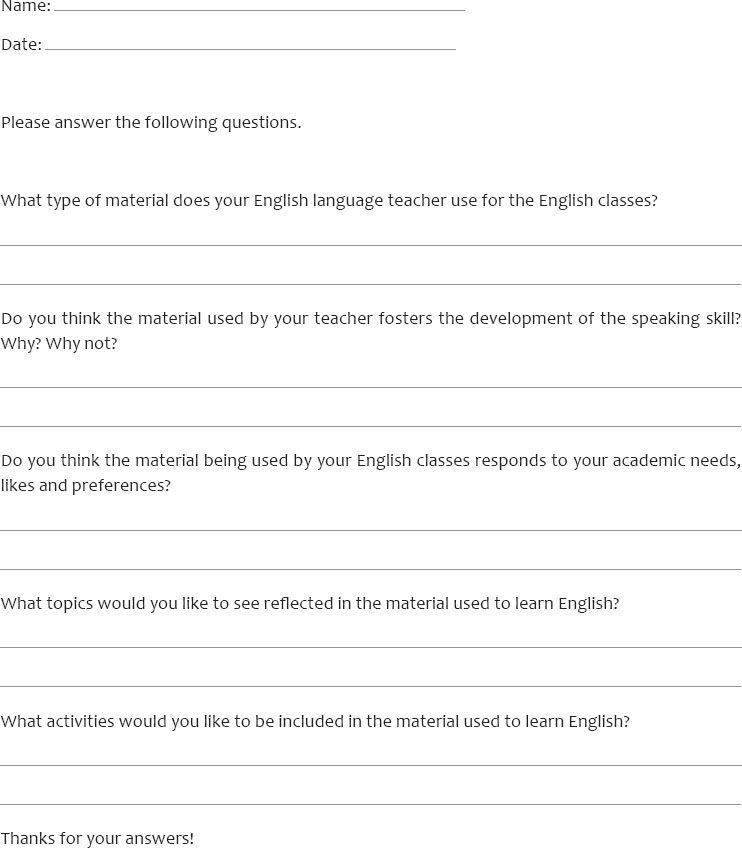
The participants in this research study were ten ninth-graders at a public school in Tunja, Colombia. Ten students were selected out of thirty-five in the English course. They were selected at random and the reason was mainly based on data management and analysis, because thirty- five students represented a huge amount of data. Data were gathered by means of surveys, field notes, and a semi-structured interview. Two surveys were applied and the purpose of the first survey was to gather information about the type of materials students used to learn English and the way they wanted to learn the target language. This initial survey was applied as a needs analysis to document the research concern. The second survey was applied after implementing the first two curricular units and its purpose was to gather students’ insights in relation to the material and speaking skill development. The field notes were written during each individual teaching session in order to better understand students’ performance and learning processes. The semi-structured interview was conducted at the end of the process (implementation of the curricular units) in order to gather information about the role of the curricular units in the enhancement of the speaking skill.
Pedagogical Proposal
The curricular units were designed in line with social constructivism as a theory of education, which promotes personal growth as collective growth. The nature of learning as well as teaching relates to knowledge that is socially co-constructed both in and outside the classroom. Vygotsky (1978) highlighted the relevance of social context and culture for cognitive development. He asserted that out-of-school experiences should be related to the child’s school experiences, and learning should be a social collaborative activity; as one principle of constructivism states, “We construct our understanding of the world and its phenomena by reflecting on our experience” (Ariza, 2004).
Subsequently, Nunan (1999) stated that in the communicative approach language is understood as a means of expression of meaning and the main goal in such an approach is to promote interaction and social construction. In the same way, the main purpose of language is to favor learners’ ability to use the target language (Celce-Murcia). As this approach encompassed some semantic notions and social functions of language, it was appropriate to rescue the aforementioned principles of the communicative approach to design and apply the curricular units.
In relation to the context, the school where this pedagogical experience took place was in Tunja, Colombia. This institution has a big concern about fostering and improving students’ English language proficiency deriving it from students’ surroundings and academic experiences. This public school serves students from the first to the eleventh grades who come from different rural settings near Tunja. Students attend two, two-hour ‘English as a Foreign Language’ sessions per week with an average of thirty-five students per course. In this school, students have a low English Language level, primarily because they have difficulties expressing themselves in English. This was evidenced when they had to write and speak in English in their classes. Studying English four hours a week is not sufficient, and students were not proficient when talking about any specific issue, or even about a daily life situation. Ten students were the informants for this pedagogical experience; their ages ranged from 14 to 17 and their English language level belong to the A2 according to the Common European Framework of Reference for Languages (CEFRL).
DESIGN OF THE CURRICULAR UNITS
Before designing the curricular units, a reflective and informed process was conducted and some main reasons for designing the material emerged:
Provide students with contextualized learning opportunities (Including in the curricular units students’ background knowledge, academic needs and preferences)
Motivate students to use the target language and learn in a meaningful way
Promote the development of speaking skills.
Understand in depth what materials development as a practical realization entails
In this way, the methodology to design the curricular units was adopted in light of the steps and procedures proposed by Jolly and Bolitho (2011). The figure below represents such steps and the lines below describe and explain the procedures followed in each phase
Figure 1.
A teacher’s path through the production of new or adapted materials (Tomlinson, 2011, p. 113 – proposed by Jolly & Bolitho, 2011).

First of all, through class observations and conversation with ninth-graders at a public school in Tunja, Boyacá, it was found that students struggled to express their ideas in English. In addition, the existing materials at the school did not respond to their surrounding contexts as they did not include activities related to their background knowledge and personal experiences. In the identification stage, in order to document and identify the situation, an initial survey was applied to ninth grade students (See annex A). There, students stated that the available material did not respond to their expectations as learners.
After having identified these two main issues, lack of contextualized material and difficulties in speaking, the decision to design materials was made. The decision was related to the fact of designing curricular units. Thus, the exploration stage was followed in order to understand the “what” of language which was going to be addressed. The syllabus for the English course was revised in order to ascertain the topics students were required to study. Likewise, some attempts to make connections with some visions of language, language learning and teaching were made. In this respect, as students were in the second semester of the school year, a combination of topics from the syllabus was chosen. The initial idea was based on language functions and semantic notions for expressing, interacting, and sharing personal information, likes and dislikes, hobbies, desires, daily actions, regrets, personal experiences, among others. This mix of topics was due to the nature of interaction in speaking tasks, rather than adapting a single language pattern; because when people interact, several language patterns are integrated. Also, these topics from the syllabus were perceived under certain principles of the communicative approach in order to help leaners develop their ability to use the target language as well as the social-constructivism theory.
In relation to the contextual realization (decision about the contexts, texts, ideas with which to work), a dialogue with students was held to inquire about the possible situations, issues, ideas, and themes they wanted to approach in the English classes. Moreover, each student wrote down their personal interests and preferences with the aim to have them included in the curricular units. After collecting, analyzing, and making connections among the themes that were highlighted the most, a list or compilation of possible topics to be included in the curricular units was made. This list encompassed topics such as agricultural products of Boyacá, getting to know places around Boyacá, famous sports and music of the same state, festivals and customs of Boyacá and Colombia. Afterwards, the final list of topics was presented to the entire group of students and they were in agreement with the selection of topics.
In the pedagogical creation a, the types of exercises and activities needed to be defined. Thus, having agreed on the situations and/or topics to be included in the curricular units, it was necessary to account for the types of activities that responded to the purpose of enhancing speaking as a result of interpersonal relationships. Interaction, engagement, cultural sensitivity and contextualization were the main core criteria for selecting activities. In this respect, interviews, debates, dialogues, conversations and creative storytelling were some of the activities designed in order to begin scaffolding the curricular units. In the same way, the activities were proposed in light of the methodology Study, Engage, and Activate as stated by Harmer (1998). This model was chosen because it provides opportunities for the development of speaking tasks.
Accordingly, the production stage of materials encompassed a long-term process. The scaffolding process of activities, starting by searching for and compiling information about the different topics proposed previously. The process of writing the material or curricular units started by designing riddles, describing agricultural process, experiences about travelling around Boyacá, compiling pictures, writing some guiding questions for interacting and sharing experiences, creating online puzzles and games, among others. The information was documented from different sources like magazines, books, websites, and students’ opinions and experiences. Once they had designed these activities, they were organized according to the model: Engage, Study and Activate. Then, features such as font, size, color and design were established (See Annex B). After the production of the curricular units, these were piloted with five students from a different group of ninth-graders and some adjustments were made in relation to instructions.
Finally, the evaluation process of the implementation of the curricular units was conducted. The material was not evaluated as such, but the performance of students in the development of the speaking tasks was. As the evaluation was perceived as a process and not as a product; qualitative perspectives were followed instead of quantitative ones and the exercise was related more to assessment than to evaluation. Hence, students were assessed according to a rubric they knew in advance (See Annex C).
DATA ANALYSIS AND DISCUSSION
The data were collected during a school year. The instruments used to collect data were surveys, field notes and semi-structured interviews. The objective for the first survey was to ascertain how students liked to learn English, and the topics they wanted to cover in the English class. The objective for the second survey was to collect students’ perceptions about the implementation of the curricular units. The aim of the field notes was to gather information about students’ behavior and performance regarding oral expression. In terms of the semi-structured interview, it aimed to document students’ perceptions about the role of the curricular units and their performance regarding the skill of speaking. The Grounded Theory methodology was followed to analyze data. This methodology was mainly divided into three levels of analysis: open coding, selective coding, and theoretical coding. In the first stage, the researcher goes through the data collected by means of each instrument in order to identify relevant information. Glaser (1978) as cited in Urquhart (2013), describes open coding as “coding data every way possible” (p. 23). In this respect, data were collected and the teacher-researcher started to go through every piece of information in order to fill out a chart with three main aspects: research question, common patterns and outliers, and related theory for each of the instruments.
In the second stage, selective coding, the researcher established common patterns from the information collected, which are greatly connected with the core of the study. “The stage when coding is limited to only those categories that relate to the core category” (Glaser as cited in Urquhart, 2013. p.24). In such a way, the researcher paid explicit attention to the commonalities across the three instruments by using different colors to group the emerging themes in accordance with the research question, by using a matrix that accounted for validity in this research study.
In the last level, theoretical coding, the data are triangulated in order to conceptualize the codes (themes) into bigger categories. Glaser (1978) as cited by Urquhart (2013) asserts that, “theoretical coding is when we relate the codes to each other and look at the nature of the relationships between those codes” (p. 26). Thus, the researcher looked at the nature and relationship among the themes or codes in order to conceptualize them. Two categories emerged, which helped to answer the research question.
Gaining confidence
The curricular units favored students’ improvement in relation to overcoming personal factors such as fear, shyness, anxiety, self-consciousness, and tenseness. In this sense, this category integrates and explains the aforementioned aspects. Lack of confidence was one of the primary obstacles that prevented learners from succeeding in the language learning process. At the beginning of the teaching and learning processes, students did not take the risk to speak English because they feared that their peers would make fun of them. It seemed students did not have confidence and well-established relationships, as is evident in the following excerpt.
“I remember of the English classes and it was a nightmare because I felt nervous and anxious to speak in English because sometimes I did not know how to express my experiences, but sometimes I was afraid of making mistakes. Over time, I do not know if it was me or my partners, but something changed. I started to be accepted and my partners were more free to share with me, so I started to feel good with them” (Interview 1, Q3, Selyta)1.
From the excerpt above, it is suggested that Selyta experienced some difficulties in relation to personal factors, which prevented her from expressing her ideas in the target language. At an initial level, everything is related to individual complexities which represented a disheartening experience for the learner. After experiencing this, the student perceived a change in her partners’ attitude, acceptability, and willingness to interact with her. In this way, Selyta overcame personal difficulties and began to develop confidence in her daily life exchanges, which is related to one of the principles in materials development and learning process (Tomlinson, 2003). Similarly, leaners started to form interpersonal relationships through the learning process, which was one of the core visions of the role of language.
In line with the initial experience described above, the English classes lacked interaction and advancement in terms of learning the language itself. Because of this, there was an attempt to design curricular units that included activities and themes students were interested in. This, for the purpose of providing students with opportunities to make sense of their life experiences, motivate them to express their ideas in the target language, and make students find the learning process meaningful, challenging, innovating and relevant to their lives through making connections with background knowledge (Núñez & Téllez, 2009). The following excerpt better illustrates the purpose behind the design of contextualized materials, curricular units in this case.
When I understood what was presented in the curricular units, it helped me feel more comfortable, and in the same way, my English language level improved, especially by mean sharing my life experiences with my partners about my trips around Boyacá, so I got excited to talk about it. Hence, I could make sense of speaking in English because I did it in an easy, fast, and funny way. (Survey 2, Q3, Patty)
The role of activities was of paramount relevance to students because of the growth in students’ interest in learning English and using the target language to express their ideas, opinions, thoughts, feelings, life experiences, likes and dislikes, among others. This achievement was due to the development of self-confidence and the integration of interactive activities and purposes, as discussed by Lee (2004). Such purposes were met through the integration of a great variety of interactive activities in the curricular units; the following learner’s insight describes what has been affirmed here.
“Learning English has been a new experience to me because I can do many things in English that at some moment I thought I could not do; for example, I am able to interview and interact with my partners and express myself spontaneously. Thus, I can say I have improved my English language level because I have trust in myself when talking about my likes and experiences” (Interview 1, Q4, L-56-62, Rabbit).
Accordingly, the topic of each activity was very well accepted by the learners. When learners understood what was being addressed, their level of confidence increased and this allowed success in learning. Confidence was one of the pillars that guaranteed initial empathy towards learning the target language.. As is evident, students had to do presentations and interviews, which were required, difficult activities. In this sense, those activities were not only challenging to students but also greatly connected to Tomlinson’s (1998) statement about confidence.
I think that the curricular units were tools that motivated me to learn English, so I could overcome the fear and anxiety I felt when talking to others. Talking about issues that are close to my life gives me opportunities to revive experiences I have lived with my friends and family (Survey 2, Q4, Paula)
In this respect, the role of the curricular units is confirmed by the increase in motivation Paula had. Thus the meaningful experiences teachers can offer students have an important role in increasing or decreasing students’ motivation. Likewise, materials designed by teachers play a key role in bringing meaningful experiences into the classroom, as in the case illustrated above when the learner made sense of life experiences shared with her family and friends. This is an attempt to close the gap between home and school because the learning process strengthens such connection, as stated by Ramos and Aguirre (2014). In the same way, they further assert that, “Materials conceived by teachers are intended to increase students’ motivation, which also helps to decrease anxiety” (p.139), as represented by the case of Paula.
Accordingly, the pedagogical intervention contributed to increase students’ motivation when they were immersed in the learning process using content and activities that were connected to their interests. Therefore, their interests favored students’ language learning exposure because their level of anxiety diminished and their level of curiosity increased, which can be evidenced through the following fragments.
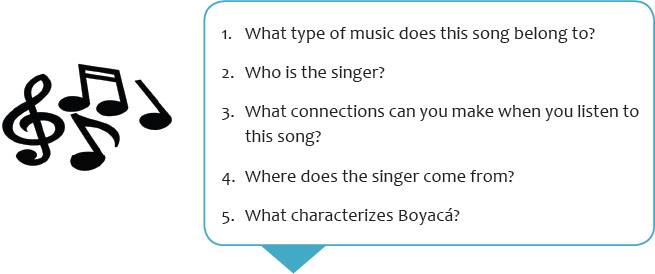
Students were asked three questions related to music and they seemed to be shy. At the beginning they did not answer, it seemed like they felt obliged to do so. Afterwards, they were excited when listening to music. After some minutes, they were eager to ask questions related to the biography and recent releases that their favorite singers had done. They took the risk of singing and speaking in English around their favorite and admired singers. (Field Note 1, L16-20)
I can say that my biggest weakness was that I hesitated a lot when I wanted to express my ideas in English. Sometimes, I thought that what I was saying was not correct, and this made me feel nervous and anxious, and I forgot everything. Fortunately, things changed when topics that I liked and knew about were discussed in the English classes (Survey 2, Q3, Susan).
By reading the excerpts above, we see that learning a foreign language ceased being seen as a punishment or duty when students found a connection with the topics presented. At the beginning of the process students were so anxious and nervous that they avoided all kinds of participation. Oxford (1999) states that anxiety damages language learners’ achievement “indirectly through worry and self-doubt and directly by reducing participation and creating overt avoidance of the language” (p.60). Based on this statement proposed by Oxford, I can conclude that anxiety affected students both directly and indirectly. The original English classes lacked participation, and students were afraid to speak in English due to worry and self-doubt. The following lines describe the second category.
Starting to negotiate meaning to approach communicative competence
The nature of this category refers to the fact that students showed their abilities and cooperation to negotiate meaning in order to achieve a single and essential aspect: use language for communicative purposes. Students took advantage of some communicative and interactional strategies such as gestures and movements to express their ideas, feelings, thoughts, and opinions about their perceptions, opinions, experiences, and knowledge construction of the topic addressed. In this sense, students were involved in interactive activities that helped them raise cultural sensitivity, mutual learning, prejudice reduction, and the fact of feeling proud, honored, and respected in relation to aspects of their homeland.
Students were involved in different interactive activities about agricultural aspects of Boyacá’s music. They also talked about their favorite food and they shared great ideas about harvesting potatoes, peas, beans, turnips, and broad beans, so they exchanged their background knowledge about that. When deciding on their favorite food they were negotiating the reason behind their choices. As they were working in groups, they asked each other about the unknown words related to the most prominent product of Boyacá (Field Note 2, L43-49)
A careful reading of this excerpt from the field note suggests that students engaged in activities that approach topics close to their actions on a daily basis. These types of activities facilitated not only interaction but also language learning through trying to negotiate meaning and content to communicate messages and acquire language and cultural knowledge. According to Doughty and Pica (1986) the feature of negotiating meaning or sequences is “the opportunity that is provided to the learner to process utterances in the L2 which become more comprehensible” (p. 43). From this perspective, negotiating meaning offers the chance to better understand what the other person wants to communicate. At this point, it is imperative to emphasize that the effort and interest in negotiating meaning has a unique purpose: to effectively communicate in a great variety of contexts.
Well, I found the curricular units very interesting and meaningful because they included themes which are very close to what I experience every day: the type of music I listen to, the sports I engage in, among others. Then, I have learnt a lot regarding language knowledge because I am now able to express my ideas in English and share with my partners the experiences I have had, as well as the correct pronunciation, creating daily learning opportunities. (Interview 1, Q2, L32-40, Juaw98)
In the lines above, the student highlights the role of the curricular units as meaningful tools for the learning process through the integration of culturally responsive perspectives in which learners’ background knowledge, situation-driven on a daily basis, preferences, and interests are included (Nieto, 2013). This contextualization favored the process of exchanging and making sense of experiences, and at the same time, improving some aspects of the speaking skill such as pronunciation. Thus, the curricular units promoted the language learning process and the integration of prior knowledge as a source for learners to take risks and initiatives to express ideas in comfortable environments..
“In the English classes I have improved two things: my English language level, especially speaking, and the social part. I have more friends and they help me when I do not know how to say some phrases in English” (Survey 2, Q5, Susan).
In this respect, the contextualized curricular units not only offered opportunities to learn from each other for students and teacher, but also to tackle interaction and meaning negotiation as two social skills when speaking (Luoma, 2004; Lee, 2004). Interaction in the classroom was a basis for establishing good interpersonal relationships which were represented by the daily communication opportunities students were able to achieve. Meaning negotiation encompassed the capacity students had to select “what” to talk to their partners about and “how” to talk to them, while at the same time, understanding, cooperating, and attributing meaning to the information exchange in order to reach communicative aims.
“I got very excited in the debate when my group had to launch a tourist guide of a place of Boyacá in order to convey information to people about visiting that tourist destination. Before starting the debate, we outlined in the group the main reasons and aspects we were going to present. I raised my hand to participate and I took a turn, so I could express my ideas spontaneously and I backed up the reasons I gave based on my experiences and the ones shared with my partners in the group” (Interview, Q6, L 82-86, Patty).
By reading in detail the excerpt by Patty, several components were activated through the activities proposed in the curricular units. First, students engaged in activities that promoted discussion and the fact of convincing others about specific situations. Second, students adopted some learning strategies such as working in groups, making bullet-points to organize and negotiate their ideas to use a number of language functions properly, as in the case of convincing people. Another important feature when producing utterances is the relevance of spontaneity, which is gained through factual situation-driven learning opportunities. Alongside the process of convincing people, learners’ personal experiences were recalled, constructed, and re-constructed as a way to identify themselves collectively with some specific experiences and convince people about their decisions. In such a process of negotiating meaning, learners’ personal identities are constructed and negotiated as well, as stated by Torres (2017). In such a way, learners had the opportunity to honor their personal experiences and cultural background and enhance their speaking skill, similar to the findings of the research study conducted by Ramos et.al (2017). Thus, there was an emphasis on the strategies that mediated the development of the activities of the curricular units, as Selyta described.
“I liked working in groups because I could ask my classmates for vocabulary, meaning, expressions, and things I did not know. In that way, I learnt from them; I really wanted to participate in class and in the debates by teams. The curricular units helped me progress in language learning in an attractive way” (Survey 2, Q2, Selyta)
Group activities was a strategy that favored students’ negotiation of meaning, dialogue, and meaningful interaction, which represent a relevant progress in language acquisition perspectives (Lightbrown & Spada, 2013). Moreover, providing students with combined learning strategies favors the development of the affective dimension and the recognition that everybody learns differently. Therefore, it might be a starting point to encourage students to engage in the learning process. Thus, stimulating students’ learning process is one of the principles to take into consideration when designing contextualized materials. In the teaching and learning processes there are many variables determining the success or failure of students, and the materials used might be one of those difficulties that can be solved by teachers when developing their own teaching materials.
The purpose of integrating more culturally responsive perspectives in the design of curricular units is to respond to the needs of specific contexts and facilitate language learning though strategies that truly motivate students to use language for social and communicative purposes. That is to say that the material has a relevant role in promoting contextualized language uses, mediating the cultures of the interlocutors involved, engaging students in the activities, and developing confidence in learners to acquire and use language in a more meaningful way.
CONCLUSIONS AND PEDAGOGICAL IMPLICATIONS
Since the main objective of the pedagogical experience was to analyze the design and implementation of curricular units based on ninthgraders’ needs with regard to the development of speaking, students felt a stronger connection to the materials and consequently were able to start developing their speaking ability. Likewise, the improvement was due to the contextualization of the content, for example by creating opportunities to talk about personal interests. When students had background information to relate to the target topic, this facilitated oral expression.
Using contextualized materials allowed students to develop their speaking skills. Two essential components, gaining confidence and negotiating meaning, fostered students’ expressions of perceptions, likes, experiences, feelings and opinions. When students could share experiences and likes with their peers, the level of anxiety decreased and language learning occurred. Furthermore, students began to feel comfortable, and learning English became an enjoyable task.
Keeping in mind students’ interests was a meaningful strategy that promoted participation because students felt they were the center of the learning process. In this sense, students found it highly important to share personal issues with their classmates. In general, implementing contextualized curricular units favored students’ opportunities to be heard, express likes, be self-confident when developing any task regarding language learning, and move beyond their current English language level.
Throughout the development of this research study, it was found that there are some pedagogical implications underpinning speaking skills, pre-service and in-service teachers, writers, and teacher education programs. Bearing in mind that the teaching and learning process at any institution requires the use of materials, much more attention should be paid to this issue. Designing contextualized material has been demonstrated through this research study that this is meaningful and useful not only for students, but also for teachers.
Thus, developing speaking skill in foreign language learning requires taking many different aspectsinto account in the classroom. The activities need to be suitable and contextualized to foster students’ learning so that they may express what they want to share. Of equal importance, a comfortable environment is crucial to help students feel at ease and advance in oral expression. Likewise, good teacher-students rapport influences language learning performance.
Designing materials requires extra efforts and a strong desire to fulfill students’expectations and preferences. It is an issue that necessarily involves time-consuming tasks that need to be developed at home. Furthermore, it demands of teachers a commitment and a desire to think of appropriate and suitable activities, according to students’ characteristics. The activities must cater to the differences in students’ learning styles, encourage learners to talk about themselves and their own experiences, and be varied and humanizing.
Teacher education programs must be prepared to provide student-teachers with the appropriate tools to start designing material for specific academic contexts. In the same way, it is vital that student-teachers get in touch with different students’ needs and realities in order to gain experience when addressing educational demands. Thus, the preceding student-teachers´ tasks should be the main concern for the teacher education programs.
LIMITATIONS
Throughout the development of the research study there were basically two limitations. On the one hand, the last curricular unit was not applied in a sequential process because of a time constraint. Thus that unit was applied afterwards because the design process took longer. On the other hand, at the beginning of the implementation of the curricular units, students translated every single utterance into Spanish, so they were not constructing their ideas in the target language. That made necessary certain changes in students’ learning processes.